
Trading Complex Opening Ranges With Fed Impact 07/14/2026
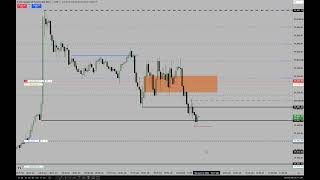
These lines here are yesterday's regular trading hours opening range gap.
Date: 2026-07-14
URL: https://www.youtube.com/watch?v=fFi2QEApVGM
All right, folks, we’re going short here.
It’s 10 o’clock.
I believe that the Fed talking is going to disrupt all this business with this fake trendline support mythology here.
These lines here are yesterday's regular trading hours opening range gap.
All right, so stop-loss, we’re going to put it just above the high here, and we’re going to be targeting down here.
I will show you what my rhyme and reason is.
Okay.
All right, so several things down here.
Lots of liquidity.
We had the CPI number that came out.
We went into the half-gap yesterday, as I was indicating that we would likely do on CPI or PPI.
You’ve got to give it a little bit of time and let the time distortion work itself out.
Why don’t you take a trade until 10 o’clock?
Because the Fed Chair is talking at 10 o’clock.
Okay, so all this stuff in here is just to hurt people who think they know what they’re doing, and they’re going to get beat up back and forth, back and forth, stopped out.
So what we’re seeing is, we want to see it run below this low, but then quickly—real, real fast—a big one-candlestick move down through that.
Just one single delivery of it like that, not multiple candles.
Multiple candles don’t bode well for a run all the way down here, but a single candle down there like that bodes well for it to go down to this level.
We have 40 seconds to do this single run below the 8:30 low.
I don’t want to lower the stop-loss down to the low of that inversion fair value gap yet, because it could just real quick—because the Fed’s talking right now.
So I have to keep myself in the position if I want to try to capture at least the event horizon.
Because I know that the Fed’s talking, they’re going to have these wild little wicky-type moves.
And we have a nice swing high right here.
For anyone that’s been short like I am, they have a stop-loss sitting right there, so they could wick that one more time and keep the body, hopefully, below consequent encroachment of that wick and then still be good for lower prices.
But it would make me nervous.
And where my stop-loss is now, if I’m stopped out, I’m okay.
I had a free look.
It pays me $837 to see if I can hold on to it long enough to ride this bull—you know, well, ride this bear, rather—down into the event horizon and then to my target.
So there’s a whole lot of things to manage.
There are certain conditions, there are certain criteria that need to be adhered to depending upon what state the market is in.
Right now, we’re in Fed-related delivery because the Fed Chairman is giving some kind of commentary at 10 o’clock today and then tomorrow.
So you have to be a little bit more cautious and not strangle your position.
And be okay with getting stopped out prematurely, or getting stopped out and then it moves in the direction you thought.
It’s okay.
Those things are going to happen.
That is characteristic of the environment we’re in today.
So if this is your first time experiencing that, and you’re watching this video after your trade either failed or panned out, and you’re contemplating or reflecting on how difficult it probably felt while being in the position, well, you’re feeling what’s normal.
I mean, you’re up against something that’s holding price action back.
Otherwise, it’d be very liquid and fluid, where it would drop really quick.
But because there’s tomfoolery afoot, you’ve got to be mindful of that.
So, said in very simple terms: don’t strangle your position.
Give it a chance to cook and let it prove to you one way or the other.
If it goes to the low of this, I’ll collapse the trade.
I don’t want to see it trade there, but I don’t want to put my stop-loss there because it then becomes a mechanism for me to worry.
I don’t want to worry.
So, that’s what we’re looking for right there.
So come on now, because of what we did here, I don’t want to sit with larger risk than this.
So now I’m going to get $3,587 out of this if I’m wrong, which is a wonderful place to be when you’re in trades.
Or I have the opportunity to ride this thing down to another partial at the event horizon.
So actually, I like the idea of this being three contracts.
So let’s confirm that with three coming off.
There you go.
We got that nicely, handsomely done.
So now I want to bring the stop-loss down to this candlestick right here because I don’t want to suffer any kind of retracement.
And hopefully, we can get something else on this.
We’re halfway between here and here.
I’m going to buy one back there.
Very good, very good.
Managed exemplarily.
Remember, all this down here, it could stop.
It just took out that low right there.
That was enough for it to say, no, I’m not going to go any lower.
So that’s why I took a partial.
See how I did that?
So it’s not high probability that we’re going to take these lows out.
It’s just the best-case scenario for me.
And now I only have one contract on, and I’ll get stopped out at $1,692.50 if I’m wrong, or I can take out another $4,192 if it can get down there.
But I want to try to finesse this a little bit lower with the stop-loss and lock in a little bit more if it can allow me to do so.
Very, very difficult morning.
Very difficult.
Not an easy trading environment to operate in.
So what I’m going to do now is, because we reacted off of that short-term low there, and we’re at consequent encroachment, or event horizon, between an old low and an old low.
But I don’t want to do it so quickly right now because it could just whip around in here, because there’s a small little gap here.
You see that?
It could stab that with a wick and then drop.
I don’t want to get prematurely stopped out, so you’ve got to give it room.
And I know it’s hard.
It’s very difficult to manage positions when it doesn’t move real quick in your favor.
But that’s trading, folks.
You’re going to have to adapt to that.
There’s no shortcut around it.
And the confidence comes by continuously doing it, desensitizing yourself because you’ve done it enough times that you’ve seen it before.
If it fails, it’s okay.
That failure on one transaction or trade doesn’t disrupt the efficacy of your model, your approach, or your ability to trade.
If you don’t hold and you don’t give the trade enough room to stay on board with it, you’ll never get the bigger wins.
That’ll never happen for you if you’re always just trying to bail on it and say, oh, I’m scared, I’m going to get out of the trade.
Just accept the fact that there are going to be times when your trade—whether you’re holding for lower prices or higher prices when you’re bullish—isn’t going to just give it to you.
It’s just going to deny you, and it’s okay.
It’s okay.
Making what was made here is sufficient enough.
This down here is just the bonus.
You just have to hold on to it and accept the fact that if it stops you out, you had a wonderful trade.
You just got kicked out.
You didn’t get to your port of destination—you know, like one of the ports you were supposed to visit if you’re cruising.
You just didn’t get to go see it.
The weather did not permit it.
There you go.
Very simple.
If you’re very, very aggressive and you’re very, very nimble, you can say, all right, it didn’t do what I thought.
I will not wait for the stop-loss.
I’m just going to close my position when it’s down here.
And if it goes lower, that’s okay.
So you see, it’s a matter of balancing where you’re at in the spectrum of your experience.
And your experience is going to dictate how you trade your model.
It’s as simple as that.
And it doesn’t feel simple when you’re going through it, but when it’s explained—and you’re all asking me how to build confidence, how to do this, how to do that—this is how it’s done, folks.
You simply have to be desensitized and conditioned by going through it lots and lots of times.
There’s no shortcut around it.
So hopefully you found this one insightful.
Until I talk to you next time, be safe.
Keep learning with us.
Get new ICT lessons, study notes and updates as we build V2.