
Live Tape Reading AM Session - March 31, 2023
05:04 - Good morning. 09:17 - Silver Bullet Setup -. 13:57 - Don’t try to hit the Homeruns in this price action.
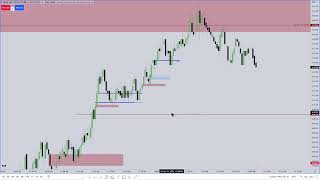
URL: https://www.youtube.com/live/DNi9S3_NA44?si=iR4GATslLl5QkUx- Watched Date: March 31, 2023
Outline
05:04 - Good morning.
09:17 - Silver Bullet Setup -.
13:57 - Don’t try to hit the Homeruns in this price action.
19:17 - What’s your dollar digging into that one?
23:45 - Price action is spotty and messy.
30:04 - Where do we want to see the euro repriced?
35:31 - Knowing what you’re looking for makes it easier to wait -.
44:37 - Live streaming is outside the scope of my skill set.
47:53 - What’s consequent on the daily candle? -.
54:46 - How to find the balance in the market.
58:29 - What’s going on in the market.
01:04:12 - What would be a short term terminus for short-term scalp?
01:09:42 - The relative strength to the upside is not joining this higher.
01:16:10 - Institutional Report -.
01:21:35 - When do you kill a trade?
01:28:02 - If the algorithm is allowing that candle to go to the print and close outside of it, that’s the warning sign.
01:33:38 - Why you’re afraid to take your first losing trade.
01:41:38 - What is an order block? -.
01:47:55 - How to make money without having to make any money.
01:54:51 - What makes a trade less probable and when does it change from high probability to not likely to pan out.
02:06:50 - Why you have to own all that stuff -.
02:14:22 - You’re on the right track because you will not be able to do this on your own.
02:22:32 - The goalpost is moving all the time -.
02:26:12 - The market has shown willingness to go higher towards the daily volume imbalance.
02:30:00 - Daily chart of the day -.
02:35:52 - What does it provide for us inversion -.
02:47:15 - If I were in your position and I was a fledgling student of price action, I’d be looking for half of daily volume.
02:54:54 - When do you take trades vs. watch price in an open position?
03:00:46 - What’s going on in the market.
03:06:47 - What you’re trying to do is copy, not learn.
03:13:31 - You don’t need money, you need the skill set.
03:19:11 - What’s your encouragement for someone who might be watching your videos?
You have to be careful when you encounter price action like this, where we have already pressed up overnight. We created a run here at the news, pushed above it with this high, created another swing high above that one, and now we have created yet another high above that one. Consequently, you have to be really careful on a Friday where the market has been one-sided. Even though I like 4104.75, we could see some kind of move lower in here that would be attacking some measure of Sellside liquidity; near-term Sellside would be right below this low here.
When I am looking at price like this—and pretty much this entire week, really—you see all the give and take, the back and forth in here. It oscillates back and forth, yet still gravitates towards levels that we can anticipate seeing it trade to. However, it does not give us a real clean area where I can say, "This is where I would like to enter; this is a very low risk, high probability entry." When I see price action like this, I refer to it as being spotty. It is a little too messy. It is not precise, and it is not allowing for precision. It may have the hallmark of going to levels that we talked about and what I have been referring to all this week, but just because it goes to that level does not mean that it has offered us a lot. Speaking in personal terms, it has not offered me a whole lot of precise entry points this week.
So when it is like that, you have to be very patient and do not demand a whole lot, because the market is going to do what it is going to do regardless. If it is not presenting itself to you in a manner that is very obvious and one-sided—where you can clearly see the efficiency, clearly see a run on stops, and then expect it to go the other direction—it creates difficulty. I haven't seen that much of that this week. So, like I said, if you have been studying it, looking at it, or trying to paper trade it, and you have experienced adversities that you feel are not common, it is because of what I am outlining here. It has been a very difficult week for price delivery; it is real spotty, just real messy.
I do not like this. See how you can draw an imaginary trendline acting as diagonal support? I do not like that at all. When lines look really clean like that, I generally do not like it. It means that price could easily just spike down in here and upset that smoothness that would be considered diagonal support, which is something I have absolutely no faith in.
It would be advantageous for you to have the Dollar Index chart alongside the specific market chart you are watching. Whether it is a Forex pair or an index like ES that we are focusing on, the concept remains effective. This comparison allows you to measure, in real-time, the relationships between risk-on and risk-off sentiment.
With all this movement here in price, there are really no inefficiencies in here to operate off of. Each new high has been posting a new high and then pulling back down into the range for no purpose that makes sense to me looking at the chart. So, where do you go in? This is the internal dialogue I am holding right now with myself: Where do I go in and then frame the risk? Where would my stop need to be? I cannot define a setup that is high probability and low risk when everything currently presents as low probability and high risk. Therefore, I cannot define anything yet. It is still early; it is only 13 minutes into the 10 o'clock hour.
It has to be obvious—it has to be absolutely obvious—as to what it wants to reach for. Right now, the only liquidity and reason for a Draw on Liquidity higher is the Consequent Encroachment of the Daily chart on March 6. It does not need to go there; I just see that as a potential upside target that has yet to be traded to.
However, if the Dollar Index rejects going lower and shows something bullish here that says, "No, we are not going to go lower," and we see displacement lower on ES, then I would look for an opportunity to draw down into the Opening Range Gap High, which is the opening price. Stripping everything else aside, if I had a gun to my head and had to trade: if we cannot go higher, this is the argument for looking for a short—not that there is one yet. If we displace lower and create a Fair Value Gap in here, that could set the stage for a short entry within that Fair Value Gap. We do not have that yet, but if it forms, that setup would look to trade down into the opening price at 9:30.
There is nothing in here; there are no inefficiencies at all. Consequently, it is hard to come to a determination or argue that the market is obviously going to go higher or lower based on it being one-sided. I cannot do that—and these are my concepts. So, I cannot do that with what we are looking at here. The market has to do something in the form of displacement, where it essentially tips its hand to you. It has not done so yet, so you have to be very patient. Knowing what you are looking for makes it easier to wait. However, when you do not know what you are waiting for, you are constantly afraid that something is going to jump off the chart and run away without you.
But as a new student or a new trader, you will not be able to see that coming. That is why new traders chase price: because they do not know what they are looking for or waiting for. They end up dogpiling on a move that is already underway, often without knowing where to put their stop loss, or they simply do not use one. As a result, any realistic retracement in the initial run will scare them out. Then, once they exit the trade—or get stopped out because they pushed their stop loss too close to the marketplace—price will move in their favor. And there they are, upset because they did not know what they were looking for and allowed their Fear Of Missing Out to overtake them. They are reacting to price, which is exactly what we do not want to be doing. We are anticipating; we are looking for something that we understand is likely to form between 10 o'clock and 11 o'clock. It needs to be one-sided, and it needs to have an obvious reason to go in one direction or the other.
So, part of this year's mentorship is putting you in these conditions and forcing you to watch price when it is not easy. It is helpful, even though you may feel like it is counterproductive. It is very helpful to you to gain a baseline understanding of what it is like when you truly do not want to be trading. These are the environments and conditions where you must not push it.
But I promise you, if you go back and look at your losing trades—or where you have lost your entire account—it is when the market is like this, and you throw in a trade due to a mental breakdown and psychological fatigue from just waiting for something to happen. That is what happens when you push that button. You think, "What is going to happen if I push the button and enter right here? I might get lucky." You start trading with a lottery mindset. That is gambling.
So, it has to make sense; it has to be clearly one-sided on the chart, or you do not push the button. And if something happens and the market moves, and you were not a part of it—it is perfectly okay.
It moves overnight. Again, it moved without me for most of this entire weekly range. Even though I was looking for higher prices, it moved without me because I did not have an area where I could really engage well with it. So, it moves without me. You have to give yourself permission to be on the sidelines. Sometimes when the market moves, you must accept that you cannot be in every price swing; you have to sleep. You have to demand that the market provide you with a setup that is clean. It has to make sense logically within the context of your model, and it has to make sense from a risk standpoint. You have to be able to frame the risk; however, defining the trade becomes a difficult task if you can validly argue both sides. That is essentially what we are seeing here, because the market has not done anything in this choppiness. It could still go up and hit the 4104.75 level, which is the Consequent Encroachment of the March 6th Daily Candle Premium Wick.
My question to you is this—sincerely. Think about this, okay? I am not trying to be facetious. Looking at this price action right here, right now, does anything in this inspire action on your part? And I am not talking about impatience, gambling, or the impulsiveness to just get in there and do it. Some of you are thinking, "I am probably going to be right about that 4104.75 level, so why not just buy here and get five handles of a run?"
Okay, if you want to do that, where are you framing your risk? Where is your stop loss going to be? Because I do not know where I would be putting that and feel like it is safe in this static price action that we are seeing back and forth. This is spotty price action to me; it is just back and forth. It is not trying to get anywhere in a hurry, which is one of the hallmarks—a signature—of what I am trying to trade. Think about the examples where you see me recording, getting involved in price moves, and pyramiding. I am building positions up larger—six contracts, three contracts, one contract—building up, and then it goes to my targets quickly. You are not seeing that in this price action. And you are hearing me explain why it is not likely to be that type of trade or that kind of session. Yet, all that can change in an instant; all it needs to do is displace.
We would wait, submit to time, and look for a displacement lower. If there is a Fair Value Gap, that is the move I am looking for. Otherwise, I am sitting still because price might just want to spike up into 4104.75, at which point I would have to wait for more information.
This type of price action is what I expect for the week—like next week—as this is typical of what to expect during these types of holidays. You might not celebrate them, but a lot of Big Money does. You will likely see some wonky price action next week as well. You might even see several price action moves that are just amazing. It is okay. They will be there when I come back.
👉
Knowing when to sit still is a skill set that is priceless. You simply cannot put a price tag on that discipline—knowing exactly when to sit still.
There is that Buyside just pumped into that, so this is halfway decent so far. If we can break down below that—and not get crazy on the downside—we can use this as a Breaker. We would have a High, a Low, and a Higher High taking out Buyside. Using these two candles here, we would extend that out into the future with a rectangle, and then we would look to see it offer resistance there. But we would need to trade below the low to do so.
V.I. and standard deviation target based on that
Lower High
higher high leader among the averages. So it's more strong, stronger than the other two
Imagine the overnight longs. They rode out the rally here. They just thought there would have been trouble up here. And then here, all this consolidation in here—they see that as support. So the market is going to run for Sellside, targeting the sell stops resting right below that level from traders hoping to catch further upside. Consequently, there is lots of liquidity resting right here.
You must keep your eye on price action. If you look at anything else that takes your attention away from the open, high, low, and close in the delivery of price, you are diluting your focus. That small micro-fraction of a distraction is just enough to cause you to miss your entry and then be upset that you missed it. It has a completely horrible effect on the day's performance, even if you remain profitable after that.
4108.50 is a volume imbalance supporting price here. So, while that is not a Fair Value Gap, it would still act as support. However, I don't have the Dow behind me, and I don't have the Dollar Index. That makes this a very low-probability setup, but we'll watch it nonetheless.
If you are of the mindset that you just want to watch one chart and not have any kind of intermarket analysis that would support or negate an idea you may be looking to participate in—in my opinion, and this is all that it is, it doesn't mean I am right—I think that you should always try to weigh out your trade idea with other markets. It will help filter out opportunities that may not be as high probability, meaning that in a perfect world, or in a symmetrical market…
Now, right in here, see this small little gap right there? That is one. The next PD Array would be the high, and the third one is the Volume Imbalance. So with that in mind, if this is going to go higher and make a higher high like NASDAQ did, the Dow would have to climb higher. The Volume Imbalance down here would be the last line of defense for that idea. So, you have one PD Array, and below that, the Volume Imbalance. You wouldn't be incorrect if you used the Consequent Encroachment of the wick instead of the Volume Imbalance—either/or—but I would prefer to see price remain above the Volume Imbalance if it is going to go higher, up to 4108 or 4110.
For really short-term, ultra-high-frequency trades, I like to look for these types of little moves here. This would be a partial, and that would be my terminus for a short-term scalp. I would treat this price leg here as a fulcrum point—meaning that whatever that movement lower was, it would be projected, and that would give me a Standard Deviation of -1.
Did the bodies respect that gap? The bodies tell the story; the wicks do the damage.
We have another Volume Imbalance here, and it is above this high. In that instance, I would like to see that stay open—not be revisited—because it can be treated as a Breakaway Gap, even though the wicks overlapped into the previous candle's body. I would like to see that stay open, treat it as a Breakaway Gap, and still try to press higher.
So now we have this PD Array: the Order Block and the gap here. Price would need to stay above that. Can it spike through it and touch the old high? Yes, but we want to see the bodies of the candles stay above this gap. That is order flow. That is how you stay onside and read order flow.
Let's just play devil's advocate for a moment. Say I was long from the Volume Imbalance, say I was long off of the high here, and say I didn't take a partial profit overnight or take five handles off.
I would close the trade with all the things I mentioned: how Cable broke lower, Euro broke lower, and the Dollar raged higher. That would keep me from getting stopped out on a trade idea that was long in here. See how it is important to look at all the other markets? Because one market is going to be ahead of everything else. So, when I am managing Risk-On/Risk-Off in my analysis, I am looking at FX pairs even though I am not trading them. I called these moves that you are seeing now—lower on the Euro and Cable—but I am using them for their intermarket relationships. I am looking at other markets to give me insight as to what I would expect in price action. We can see these reversals in real-time and the warning signs that are there in price, so that way you are not surprised looking at it thinking, "Why did that just happen?" You have to look at other markets.
Let's play the high-risk game. We're going to suggest that this Fair Value Gap right here... we want to see trade just one tick above this candle's high, which is 4104.50. So far, we haven't seen that. I want to see it trade to 4104.51. That will be the Institutional Order Flow Entry Drill, and we'll look to see it trade down into Sellside Liquidity. There you go. That is the setup—that is the Institutional Order Flow Entry Drill. It is high risk because we haven't had these lows taken out. The stop would be above the high here.
So, if this were a trade that I would be in for real, I would have the least amount of risk on. I would not be trying to pyramid, and I would not try to do a large position; it would be something very small and insignificant, just to participate in it.
The reason why I would be considering this at all is because we had such a reaction in Cable and Euro. Even though you are not a Forex trader, if you are looking at this kind of market here, we are using it for a Risk-On/Risk-Off scenario. The Dollar Index is still higher. NASDAQ failed to make a higher high with ES. Dow has failed to make a higher high with ES. The Dow has been the laggard all morning.
We don't really have the Shift in Market Structure that I would have liked, but I am just playing on the idea that this is an imbalance and we have already gone to a premium. I am just watching in real-time with you. So, if I get stopped out hypothetically, it is okay. It would communicate the idea that I am telling you: these are environments that I don't want to participate in, and it would communicate effectively why I don't want to do it.
Everything in here would suggest that this should go lower. At the very least, it should have made an attempt to get below here, and it hasn't done so yet.
As my 20-year-old self, I would have opened the stop up larger, thinking, "Okay, it just needs to go back to this old high as resistance." That was my mentality; that was my thinking. So the stop would be elevated up to here, which does what? It offers up more opportunity for the market—if it is going to go higher—to dig into that liquidity that would be above that high. So it would be a larger loss taken needlessly, when the market has already communicated to me that the trade shouldn't be done based on what it is doing.
The imbalances here, where the bodies are, are telling you that it has unfinished business up here. So if you started with a short down here and your stop is at the high—or just one tick above it, as I hypothetically outlined—you don't have to sit there and take the full stop. There is a logic behind where you can kill the trade when it is no longer a live setup because of what the candle bodies are doing. Now, that would be a full stop out. So you don't need to panic, and you don't need to be fearful, but you do have to respect the measure of risk. If you don't see the signatures in price action supporting your idea, you don't waste time and spend mental capital worrying about the trade setup. It is either going to be good, or it's not. The trade immediately starts delivering for you, or it doesn't. And if it doesn't, it is problematic.
Then, by having that imbalance framed, you start seeing a body like that... That right there is your first warning sign. And then we open up the next candle and we trade higher than that candle. That's it—you kill it. You don't hold the short from that point on. So what do you do? You wait, you move to the sidelines. And then when it goes higher like that—where it would have been an initial stop out—you feel better about yourself because you managed risk appropriately. You are not reacting to price; you are reading price. You are letting it tell you the narrative and the story that it had unfinished business above here. Why? Because the imbalance should have kept the bodies inside of it, and it was unable to do so.
So we are not taken by surprise. It just didn't pan out in a low-probability condition. So all these things become much more impactful in your learning. That way, you are not guessing. You are not trying to pull things out of thin air hoping it pans out for you, and you are not worrying about getting stopped out. We are looking at the stop in relationship to what the prices are delivering. If price is outside these imbalances—where we know based on my concepts the bodies are not permitted outside of them, only the wicks are—as soon as we have a close outside of it, that indicates that this is probably going to have to be revisited again. And if your stop loss is there on a short and you don't see this, as I outlined in real-time, you will get a larger loss when it is not necessary. That is not necessary.
Now, there are going to be some times where the market does go against me, and it just snaps and runs to the stop. There is nothing you can do about that. That is the reality of trading; you are going to have that. It is a cost of doing business. No one is perfect; you are not going to have a 100% strike rate. And this stop—it has been paid to do its job: protect you from taking a larger loss. But you still have that responsibility as a trader to watch price action.
I purposely talked about how it was low probability. Weakness across FX, strength in the Dollar, and S&P divergence across the indices. NASDAQ didn't support a higher high when ES did.
If the algorithm allows that candle to print and close outside of the array, that is the warning sign that the stop is not safe, and you have time to abort it. Don't waste time worrying about it. Don't second-guess it. Because what is worse? Thinking that it is likely to happen and then watching it run to your stop, taking a full stop out—whatever the maximum risk was that the trade idea entailed? Or, seeing it, understanding that the probabilities have shifted so far away from you and are not in your favor anymore, and neutralizing the position?
By taking a very, very small loss—a paper cut—you are being correct by limiting the exposure of risk and not letting it take the full stop. The mindset that provides is that it is easier, and much more palatable, for a trader to take a loss when they are doing it with the knowledge that it is a smaller loss than it would have been if they had let their stop loss get hit.
Think about your development up to this point right now and how you have been utilizing the trade, taking losses, and managing if you have been stopped out. How many times have you sat there and knew in your heart that this is probably going to stop you out, but you didn't have the gumption to go in and close the trade? I don't want to take a full stop, and there is nothing wrong with that. You have to treat this the same way that I teach you to take partials. Why? Because partials pay 100% of the time. There is never a partial profit, ever, that failed to make a profit. If you are in profit and you have taken some of the position off, you are profiting—there is nothing wrong with that, no matter what anybody else tells you. That is a good thing.
You must have the same mindset regarding preserving equity and limiting risk. Here is why I teach these PD Arrays, order flow, and studying real-time tape reading: you will be able to see when the positions that you are in—and you have defined risk as you should, with a stop loss always—are in trouble. There is no necessity for you to hold for that full stop when you now have indications being presented to you in the delivery of price telling you that your stop is in jeopardy. So you can say, "Okay, with this trade idea, I was looking for it to go lower," knowing it was low probability. But your trade shouldn't be set up in a low-probability condition; it should be high probability.
I taught you exactly when to abort the trade. Exactly. When it's no longer viable. You should never feel bad about avoiding a trade and preserving a full stop out. But unfortunately, as a new trader, you're resisting that experience by letting your full stop out, occur or opening the stock to a larger stop loss, which are both detrimental to your development and longevity as a trader. So you have to have a reason to know the trades no longer viable. Do you have that? If you don't have that, this year, you're learning how to do that. These PD arrays, the things I'm teaching you the imbalances, the liquidity, they have a dance between them. And when they don't agree, do not allow full stop loss. Just close it, I promise you what you're trying to avoid, which is losses, you want to be comfortable taking small losses and knowing that you did the right thing by taking a small loss, then allowing it to be a larger full stop out. And you'll feel empowered because of that.
This is a really, really difficult market to trust because the things I lean on for support behind the ideas are not materializing in the other markets. Again, this defines my version of "low probability." When these types of moves do form, I will not be a participant in them. They will move without me, and that is fine.
But getting back to mitigating loss and reducing overall exposure to risk: that is a paramount issue for your continued success—or eventual success. In the beginning, you are afraid to take that first losing trade. Let's say you get funded. You are going to be so terrified to take that first trade because you don't want to start off on the wrong foot with a losing trade. So, take the smallest amount of leverage that you can put on, flip a quarter—heads you buy, tails you sell short—and go in and let chance decide the first thing. If it is a losing trade, who cares? You didn't make that decision, so you can't feel bad about it.
It just breaks the ice. That is all it is: an icebreaker. If you are so paralyzed by it, just accept the fact that you get some kind of initiation that is outside of your own decision-making. That way, you can't be blamed emotionally or psychologically if the first one is a losing trade. So now you have broken the ice; you are in there. If it wins, you can attribute it to skill because you did something outside of yourself. That first trade is behind you now. You are not paralyzed like a deer in headlights.
But as a student starting to learn how to do this—whether under me or anywhere else—your number one fear is doing it wrong and losing money. That is something to be mindful of because nobody really wants to go out here and try to lose money. But you can't allow it to paralyze you to the point where you can't make clear decisions about what you are doing with risk. Risk has to be assumed; there is no way to be in this industry and not assume risk. There is always risk. That is why the disclaimers are always there. That is why you are constantly bombarded with "you can lose more than you have" and "previous experience, outcomes, and results are not indicative of future results."
You know that subconsciously. You also know the times when you were looking at price action and it didn't do what you thought it was going to do. That would have materialized as a losing trade. But you filter that out; you pretend that it never happened, like you didn't see it. But you really did. Your subconscious is making a mental note of it. Subconsciously, you are an emotional mess, and your psyche is remembering that as something that triggered you, even though you are trying to block it out.
Then, when you start trading with real money, this is the chemistry behind why it is difficult for you. You may do really, really well on a demo or paper trading. But when you go to a live account with real risk setting, all the things that you did wrong—not practicing properly, not managing risk—come back. You have not conditioned yourself or desensitized yourself to doing it wrong without being torn up because of it. You are going to do it wrong. Everybody that is going to ever trade in the future will do it wrong. I will do it wrong; you will do it wrong. But how much skin is going to come off because of that? How much flesh is going to be removed from you? How much equity is it going to consume? You have control over that.
So, if you look at these things and use them as milestones for intellect—thinking a winning trade or a series of winning trades means you are smart—it doesn't. It doesn't mean you are smart. It just means that you made the right decisions at that time, under those current circumstances.
But the risk has to be defined all the time. And that initial risk is not limited to "that is all it is going to be." You can find ways to limit that even further. But you have to look at price action. You can't just marry the idea because you are now in a trade and can't bring yourself to take a losing trade. You think, "What happens if I get out of it and it moves in my favor?" Well, what happens when you don't listen to the logic I am teaching you, and it smokes you every single time at maximum loss? Every time you offer up risk to the marketplace, it is going to take it. If you are offside—meaning you are in the wrong direction of the market—and you have a stop loss, you are allowing them to take that liquidity, and it may consume you.
So, when I teach price action, it is important to note that these rules are there for you to learn from. You have to trust over time that you can't trust the market unless you are in here doing these exercises—watching in real-time and not being afraid of it not painting in your favor. You need to experience that. How are you going to react to that? Journal that. Are you frustrated because even though you were just tape reading, it didn't pan out? How does that make you feel? What is your chemistry like at that moment? Are you hopped up and just angry? Do you want to vent? Do you want to go online and complain? Do you doubt the concepts? Do you doubt you will ever learn how to do this because of that?
All those things... I want a 109.50 level in the Dollar Index, which is still hanging around near its highs.
So now, go back to that 20-year-old ICT. When I would open my stop up larger... right there, that would have been a larger loss. I was not reading what I have learned later in life, which told me that this is not going to be a good idea, so kill it before it gets there.
How can someone look at that and think that is not a good idea to learn? The books don't teach that. Books say: "Here is a stop, accept the risk. If you get stopped out, okay. Trade your plan, plan your trade, and stick to your game plan." Well, the game plan is not to lose as much money. If you have a mechanism that helps you limit that, then you should do it.
So let's just say, hypothetically, you would have been right there at that candle's open; that would be your long entry. Okay? The idea is that that is an Order Block. You can trade inside of the range of that candle; you don't need it to go away and come back. If you are expecting it to expand inside that candle while the candle is painting—like when this was forming—you can take a long entry there. By understanding that, you can go back and look at my other examples when I am trading live.
And when you see me doing executions, I am noting the candle—that it is the Order Block. You are looking at that thinking, "Why did he enter there?" Because I am inside of the Order Block. I am anticipating that Change in the State of Delivery. But regarding the opening price—you don't need price to come back to it, because it might not do that. Especially since we have ES doing what? Expanding higher, reaching...
this is the market that's going to try to catch up with ES. Not that I am a NASDAQ trader—obviously I can trade it—but that would be the equivalent of what would be an ES run using the Sick Sister approach.
👉
You never thought you could learn so much without having to make money, right? This is how you get there. You get to remove all the concern about losing money and making money. Learn to read price action. There is so much that you don't know that is required to be profitable consistently.
Those are three PD Arrays; we don't want to see any closing body below Mean Threshold. As long as it doesn't do that, we look for 4119.50. This is not for a trade, as we are too far in the premium. Now, we are too far up near the target. So, because we are in a change of the session, we don't use this as an entry. This would be the idea that, assuming we are long, we are watching and managing the position. We want to see: does the price continue to give us the signatures that we would look for, for delivering price in our direction?
So, these three Discount Arrays are inside of the Premium range, right before we get to our target. So this is our target up here, and the inception move is down here in the Volume Imbalance. We are in the upper portion of it, so we don't want to add anything. So we have to just manage the trade idea.
Regarding the Mean Threshold of the Order Block—that has to support price. If it trades and closes a body below that, that is problematic. Then you would have to take something off the trade—reduce the leverage that you have open. That is the only time I give permission to a student to take something off when the trade is moving against you while still being in profit. In other words, you are having open profits erode as it is going down in here.
But just like I was teaching a little while ago about when you want to kill the trade or abort it when it no longer makes sense—you are closing the trade before it hits your stop. But here, you are closing the trade while it is taking more from you, but you are limiting how much it is. Well, in this case, it is taking open profits; that is unrealized loss retracing against you if you are hypothetically long back here or in here. So you can't look at it as, "Well, I can't take a partial now because I'm doing it when it's going against me." But you have to do that if it closes below the Mean Threshold of this Order Block.
Because it might be indicating to you that it is going to come back on your stop, which may be trailed. Even if it is not trailed—regardless—you want to reduce the leverage and reduce the exposure to risk, because it is indicating that we are possibly either consolidating or retracing.
And it is Friday. And we are transitioning from the morning session into the lunch hour, where stops usually get rolled against. In other words, who has been making money this morning? The longs. So where are their stop losses during the lunch hour, or just after it? The typical performance in price is that it usually rolls against the liquidity that was built up during the morning move higher.
And either it goes for them and continues lower, or it goes against it, hits that liquidity, and then continues going higher. Either way, it is likely to run against the Sellside because we have seen delivery on the upside all morning. Does that make sense?
The fact is, we don't want to be buying up here in a premium relative to our target. We are using Discount Arrays to filter the willingness of price: does it want to go higher? Because it keeps giving us indications that it wants to go higher. I use three PD Arrays to do that.
It is the understanding of what makes a trade less probable. When do you get into a trade? When it looks high probability. And when does it change from high probability to "it's not likely to pan out"? What are those factors? What are those things that lead to that occurring? So that way, you as a trader can use that analysis concept to mitigate unnecessary stop-outs at full risk, or abort a trade before it turns into a losing trade.
Those topics... they are just not available. And it was a very serious point of frustration for me. So I had to go in here and just make up my own rules as I went. What do I do? How did I lose? What caused me to go into a downward spiral and caused me to blow my account? What were those things I was thinking about? What was I fearful of? What was I overconfident about, but then price told me that wasn't likely? What were those things that kept happening?
That is what I did. That is the language. I am teaching you all these Core Content lessons from my private mentorship. That is the language; that is not mentorship. This—what I am doing with you right here—that is mentoring.
I am teaching you how to read price so that you can do this on your own and navigate it without feeling the tug-of-war—the emotional and psychological impacts of being right or wrong, being confused, or needing to wait for more information. All of that is brought to the table as a trader.
It is about knowing what you are supposed to do, how you are supposed to think, and how you are supposed to react to what you are seeing in price action. This relates to you as a trader managing risk—not just reacting to price to find entries, but reacting to the indications these price movements are telling you. You can't stick with a trade when, as I am teaching you, the signatures are telling you it is no longer good.
If it is doing that, it is indicating to you that the setup is problematic now; it is not likely to pan out. So what do you do? You either abort the trade or take half off. That is something for your journal, by the way. It is not the first time I have mentioned that.
But when you have three PD Arrays break—arrays that were supposed to be supportive for your trade—if they break, that is the clearest indication that you are probably in a reversal, and you just don't have the experience yet to see it. Now, there are going to be times when you do that [exit/reduce], and price turns around and keeps going in your favor. But you don't have the experience to know that is going to occur, which is the reason why I gave that rule-based idea to my students in the early stages. You don't have the experience, which is something that has to be acquired on your own. Experience has to be earned. You work for it.
I was talking about things and making you understand: this is what it is going to feel like to be doing it. Sometimes, price isn't going to do what you want it to do. How are you going to perform as the trader? What are you going to do with that? How are you going to manage the risk? How are you going to stay with the trade, if at all?
What are those defining moments in price action? You need to know them so that you are not caught off guard. You are not surprised; you are relaxed, just listening to what these candlesticks are telling you. The only time that you should be shocked or taken aback is if some violent thing comes in where the market does some crazy move—yes, up, down, something erratic. You know, some war event, some kind of terrorist attack—that type of thing where nobody can see it coming. And then, boom, there is all kinds of shock in price action. You can't avoid that. Nobody can. That is the inherent risk of trading, and your stop loss might not even do its job in those instances.
You know that is likely to happen when you sign up and start with a brokerage. Whether you deal with a funded account—I don't know what their initial disclaimers are, or if it's just a payment for your arrogance, I don't know. But when you open up with a regulated broker, you are signing documents stating that liquidity may not be there for you, and you may lose more than you have—meaning what you have in your account balance, and also what you have at risk per stop loss. That is a scary thing when you really take into consideration what that means.
We are in a climate where a Black Swan event can happen—something unforeseen by the general public that comes out in an attack. Think of September 11. That occurred before the market opened up that day. If it would have happened during market hours, that would have caused all kinds of fluctuations. Maybe not the first plane hit, but the second plane—boom. That would have been obvious. Because when I saw that second one hit live, I was taken aback. I was frozen in fear, standing right in my living room. I couldn't believe what I had just watched. That would have caused all kinds of chaos in the marketplace. It would have been amazing to see it [technically], but all these things happened before the market opened up, and they kept the market closed for several days.
So, barring those types of things, we are not surprised. We are not shocked. We are not scared. We are not overreacting to a price move. We are reading price; we are just watching it. And it is either going to tell you a story that makes sense for you to position yourself in and assume risk, or not. Or, once you are in it and you have assumed risk, it is going to tell you: "This is no longer something you should be a part of."
So, take half of it off. If you still feel the conviction to hold onto it, take half of it off. That way, even if it does run on and take your stop loss, you did not give it everything that you made available to it in terms of taking a full stop out.
But in the beginning, as a new student, that doesn't make any sense. Because you got into this to make money, not to get half the position off. You think, "Because what if I'm wrong [about the reversal], and it goes in my favor? I listened to this dumb rule that ICT is talking about. Hello?"
The chances of you knowing when that is true and when it is not true as a new trader are next to zero. So I have built this in with this language of teaching how to read price action. I have taught my students to look for these protocols and follow them systematically, and to be detached from the outcome of the trade. You have to have these rule-based ideas. Because if you don't, you will react to price. You will get scared out by the little fluctuations that occur. It will change your entire mind and scope of what you think the price is going to do for that particular setting, that session, that day. And it is probably a one-minute candle that changed your whole view because you don't have the experience reading price. You haven't been here before. You can't say, "Well, I watched a couple of your videos and I looked at last week, and I saw price for about 20 minutes two times that week, so I got experience."
Instead, I want to be very precise about what I am doing. Calculated. Nothing is going to bother me. I want to be completely bored by what I am looking at; I want to anticipate these things. And if I can't see them coming, I am not interested.
Because if you are going to react to it, well, you are going to be at the mercy of your emotions. And whatever the result has been on your last trade, that is going to be the deciding factor of how you are going to think and feel regarding your next trade. If it was unprofitable, or you had to close it with a smaller loss to protect your stop loss, that is not going to feel good for the next trade. You are going to be second-guessing yourself. Second-guessing the concepts, the day, the model... everything in there is going to be a perfect little distraction, a perfect little excuse to say, "It wasn't my fault; it was something outside of me."
And you have to own all that stuff. You have to be responsible about everything you are doing, all the ideas. No one is telling you to push the button. No one is forcing you to collapse the trade. But you have to have rules and ideas that help you manage those decisions. Because when these markets are moving fast—and this ain't a fast market; this is like watching paint dry and grass grow. I don't like these conditions; I don't like it. I am used to waiting for environments that are very quick, very sudden movements, and I want to trade in news environments.
But to properly mentor you, you have to be here seeing this. You have to have your nose in the charts, feeling like you could be doing something else better right now. If you say, "I'll watch this video later on when I have extra time," you are going to fail. I promise you, you are going to fail. Because you are going to have so much hope built up around the hype. That is my concepts right now—everybody is talking about it, using it.
You can go back and look at the logic in here. Look through your timeframes, and you will see the Dollar Index was correcting higher when this was delivering. Cable was similar.
Going into noon, I want to see it expand up and just tag that 4119 level, and that will be the close for today for me.
"This is boring, ICT." Then you are on the right track. You are on the right track. Because you will not be able to do this on your own until it is boring. You are not going to be influenced by the outcome—potential profitability or potential loss. You are indifferent to the outcome. That is the right mindset. Every time you put a trade on, it is an experiment. You are observing: does it do what you think it should do? And you observe, and you submit to the time that it takes for that to occur.
So, we had a higher high here, going into the lunch hour after consolidation. So this is where you want to go through cycling through your indices.
lower high that's problematic is that
I don't usually have these drawn on my chart. Obviously, this is very distracting for me to teach you like this, but you need these visual aids to see what I am looking at—where my attention is. Over time, you won't have them on your chart either.
In the very beginning, it is important for you to note them because you are going to log them. Having examples like this—referring back to old moves where you have watched this and screenshotted it, noting all these instances where price does these things I am teaching you that you should respect and how they should deliver—is crucial. By having lots of examples of them, you will feel much more confident when you are watching real-time price action because your subconscious remembers all the things that you are celebrating as experiences in your journal.
So, you want to make that journal very high energy and positive all the time. Because it means it is going to mean something to you—just like when you buy a new car. When you drive off the lot, you think you bought the car that everybody else has now. You like the car, yeah. But now because you bought it, you have anchored it to something much more emotional to you; it is meaningful to you.
So, you want to treat all of the things in your journal much in the same way. You want to make it a positive experience. Everything you look at in there is going to be keying up your Reticular Activating System. That means that your eye, when you are watching real-time price action, will see these things in real-time. Whereas right now, you may not have noticed the Volume Imbalances, you may not have noticed the Fair Value Gaps that I am pulling out. But you are seeing them done in real-time here, and you are watching the reaction in price afterwards. We are anticipating—we are not reacting to price; we are anticipating what price is going to do.
In the beginning, you are going to do everything wrong. You are going to feel like you are not learning, and that is normal. But you want to record in your journal that you saw these things happening before the fact: "It was amazing to see this pan out as I expected." You are tricking your subconscious into thinking that you had that experience for real. It is positive self-talk. It is just like if you were having an anxiety attack; you are telling yourself, "There is no reason to be afraid. There is no reason to be concerned. There is no emergency." There may have been something that triggered it, but the way you talk yourself down is by feeding yourself positive reinforcements.
These things need to be positive in your journal. If you don't do that—if in your journaling you talk about, "This sucks, another losing week, another losing day, I'm never going to get this crap, this is effing garbage," or whatever toxicity you feel like you want to put in there—don't. Replace it with something that you feel good about. Even if you have to find it in hindsight, that is going to be remembered by your subconscious. So when you are watching price action, your brain will see these things just like your car. When you buy it, you are going down the road, you aren't really looking for your car because you are in it. But then your eye jumps—"I just bought this Jeep, it's got all the customizations"—and you spot the same thing. Because you think you have the only one like it? Well, in reality, your journal is that very thing. It is the only one like it.
That is the best trading book that was ever written, and you are the author. That is amazing. Because these things are going to be much more impactful to you; they are not going to be all that meaningful to someone else if they read it. But to you, it means a lot. This is your journey; this is what you have been working and striving for. And it is full of the best cheerleading ever, that is impactful and meaningful to you.
So when you do your journaling and you annotate your charts, record the observations that you are seeing in price action as if you saw it beforehand. The way it works is that you see this and you study your journal on the weekends. Look at price action moves in relationship to how the week closed, and go back and look at your screenshots and what you were recording in your observations on that particular session, that particular day, and how it fits in the grand scheme of the entire week. And over time by doing that, you are building pseudo-experience that will feel like experience that has been acquired over the years. When you start looking at real-time price data and you forecast over the tape what you think you should see in price—how should it behave? Should it find support at this level? Should it gravitate to this level? Should it not do a specific thing?—you are applying these concepts.
The rules that I am teaching you are those ideas, but you have to submit to them. But you also have to do the work of recording annotations in old moves. Screenshot them even if you weren't able to watch it live, but record all that stuff in a real positive light, supporting your view like you were there. Like you were watching all this stuff real-time here. You record: "I saw price action do this live and it was such a rewarding experience to see it pan out to script."
Now, you may not have had that very thing in mind when you were looking at it on your phone at work. You had no idea what was happening. But when you get home from work, or you come home from school, or you wake up because the market traded when you were sleeping, then you record it like you did see it. It tricks your brain; it gives you a head start in experience, and you are filtering out all the negative things.
Everybody does this in the beginning. They talk themselves out of doing this, they scare themselves, they talk themselves out of it: "I'll never learn this stuff. It's too complicated. It's too hard. Too many rules. How do I know when to do this? How am I going to do that? It seems like all these things are changing all the time. The goalpost is moving all the time." It is not. You are just trying to anticipate. You are trying to accelerate the learning curve when time is necessary. And how much time is going to be unique to each one of you. But you have to give yourself permission to require whatever that time is and submit to it.
So, all of this here: every time you see the market trade above a short-term high, it is indicating that Order Flow is bullish. When it drops back down into any of these Discount Arrays, you can accumulate a long position—if you are not in the Premium range of where you are targeting.
But because you would be in a trade, looking back here in hindsight somewhere, you would have to trade your position and manage it with this logic. There are some of you who are going to be like, "I'm using this! This makes perfect sense. I'm going to use this as my model." You are going to get hurt. Why? Because you are going to be trying to trade in the Premium areas when we are transitioning to lunch. We are already rich in terms of a premium, and you are going to get retracements that run against liquidity.
There might be times—like it does here—where it pans out nicely. But usually, at this time of day, you will see it come back on the stops that haven't been traded to yet and punish the people that have been trying to profit going higher.
So you want to screenshot that—you can use my chart right here. For instance, over here, you would annotate that the market has shown a willingness to go higher towards the Daily Volume Imbalance, which is this shaded area up here. That is the pink shaded area. And the old high at March 6, 2023—that is the 4119.50 level.
And you annotate that as if you saw this coming. We watched it live. So you really aren't lying about that because you did see it, but I told you to watch it. And it deliberately offered five handles going towards the level that we were looking for—4119—for that Daily Volume Imbalance, and it accelerates to the upside.
Go to your daily chart on ES and look at February 16, 2023. That is a SIBI.
Now, looking at this, do you see a pattern? Do you see a setup? Do you see a model of the things I have taught? Which PD Array speaks most clearly to you looking at this? Over here, there have been several instances where price has been called to react a specific way, and it has done so.
What in this fractal of price action—meaning the portion I am showing you right here; that is a fractal—what in this delivery of price is your choice setup? What is the one that you think is easy for you to spot and that makes sense to you? Not all of you are going to agree with everything I have here, but it is in the chart. I was watching this just like you are, live.
What is in this chart that I annotated? What is it in here that is your model, or closest to your model? Is it the Fair Value Gap here? Is it the Volume Imbalance? Is it the Inversion Fair Value Gap here, which we were looking for it to do what? Sell off.
And then the trade idea was no good because it did this: the candle closed outside of the range. So we talked about how we can mitigate the loss and make it smaller. I took you into NASDAQ, I showed you, "Okay, we use the Sick Sister approach where we can now mitigate that actual loss that would have been realized by collapsing the trade because it was outside the entry." So that would have been mitigation of loss.
And then we have this extended forward. If it was failing to go into a short here, what does it provide for us? Inversion. So it trades away, comes back down in, and does what? It offers support and starts to gravitate higher. I mentioned that, "Okay, this puppy wanted to go to 4119—4119.50—that Daily Volume Imbalance." So our mindset shifted to looking for all the PD Arrays that would support price going where we're seeing it reach to.
So which one in here is meaningful to you? This is the part where mentorship is individual. It is uniquely your moment to decide what you are going to do in price, because not every one of you is going to agree with everything I have mapped out here. Real-time in the market just used this as a stairstep; each thing was being respected, each thing was being delivered to and from. You are not going to agree on all of it. You are going to see certain things in here that some other students watching would say, "I'm not interested in that," or "I would have traded this Order Block if it would have traded down to that. And because it didn't, I missed the move." Okay, that's fine. There is nothing wrong with that.
But the question was: using what I have outlined here, what would be the thing that you would gravitate to? Or where does your attention gravitate to? Using what I have outlined here, is it something that you have seen repeat in your own observations? And now you have watched it live, being referred to in price delivery, and now you have seen it pan out.
That encouragement comes from you seeing it do it—watching it, submitting to tape reading where you are not pushing a button. And you had all the upside advantages of not having any risk to worry about. You don't have to be worrying about whether you are right or wrong. You are learning how to read what price is doing.
And over time, because you are able to do this and you are bored by it—that is the goal. You want to be bored. You know what it is likely to do, you don't really care if it works, and you don't really care if it doesn't work. You are just going to stick to the rule because this is what you are supposed to be doing. That is the exercise. This is the regimen that you have to put yourself through for months. And once you submit to it long enough, you will be able to see these things like I am painting for you live, and watch how price delivers from them, gravitating towards a logical level of liquidity or inefficiency.
The understanding of when you take trades versus watching price in an open position relies on the PD Array Matrix. When we are really rich in a Premium in a long order flow that is bullish, you are not trying to add more to pyramid; you don't want to do that. Because you are already high up in that PD Array Matrix where it could retrace back to Equilibrium. You don't want to be in that. That is the reason why I don't pyramid or add additional entry points once I get past Equilibrium of the anticipated range.
Put your Fib on that low to the objective that you think it is going to go to—which is that 4119.50. This range... that is an Implied Dealing Range; it has not yet materialized. Your analysis is implying that if this move occurs—if it delivers that move up there—at certain points within that range, there should be some measure of new re-accumulation.
Meaning: here is 75% of it. Here is 50% and 25%. So, the first quarter of the range between this low and that high is here. We have an expansion there. So nothing really starts outside of what we have already seen here. Then it runs, and then we have 50%.
Isn't it interesting that we saw all of the consolidation there? Which is exactly what is in my Core Content lessons—look at Grading Price Swings. That is what I am doing here.
The consolidation happens at Equilibrium, which is this 50% level. Look how much time it spent around here accumulating new longs. That is what you have to manage as part of your open position that started down here—or maybe you got in on this Volume Imbalance down here, which we watched live. It depends on where your entry would have been.
You are going into this so that we can record it and take these moments to add pseudo-experience for your journaling. But the logic is that the consolidation is midway between where you think it is going to go—that is the target. So it consolidates at that 50% level; that is Equilibrium, and that is where it will consolidate.
So you can anticipate longer periods of Time Distortion. What is that? It is where the market continuously moves sideways, and every little PD Array that would otherwise be utilized at other times—like when the run is occurring—you have to ignore. You have to take away some of these candles. Okay? Take some of these candles away; just ignore them, because every one of these candles is inside of the range from this high to that low. So we don't need to see all of them.
What is the defining range high and low? This high, that low, and that high. What is the PD Array that should support price? The Fair Value Gap. The bodies are supporting it. Did it close below it? No. Did any other body close below the low end of that Fair Value Gap? No.
So what is it suggesting? It is accumulating. Accumulating what? New longs. So it is allowing Smart Money to accumulate their long positions in here and then wait for the market to trade higher and displace. That means the short-term high is taken out. That is also qualifying and confirming that Order Flow is bullish.
It is not classical support and resistance. It is Algorithmic Price Delivery. These little gaps, these little Volume Imbalances—you need to be aware of them. Because they can be your entry, or they can be your target for partials or Terminus. Whatever you feel is your model. It is one little piece in that cog that is your model or that trading plan that you are in the process of developing for yourself—one that you uniquely trust and follow. It doesn't matter if anybody else agrees with it. It is what makes sense to you.
And regarding the final quarter percent up here... regarding the Order Block I outlined: in my mind, when I am watching price, I am thinking we are about at the upper quarter percent (Upper Quadrant). So that means it is going to be the biggest, quickest, sudden move in this area. It is not likely to do what? Take sell stops.
You don't want to anticipate, in the upper portion, a move dropping down to take Sellside. It is not going to do that. Why? Because it is going to be in a hurry to get to the liquidity that would otherwise be pulled from the market if it retraced. Traders that might be short might be thinking, "Okay, I'm just gonna get out there because it might come back and get my stop." That allows them to pull their stop loss from above that March 6th high. They [the algorithm] don't want them to do that.
So the algorithm is coded to allow for no deep retracements in the upper 25% mark (the Upper Quadrant in this example). And you are seeing that run into the Order Block where it didn't go outside of the Order Block body at all, or the candle. It never went down deep into it. Yes, it accumulated more, and then—straight shot, right up into the target.
Keep learning with us.
Get new ICT lessons, study notes and updates as we build V2.