
Live Tape Reading - Fed Chair Testimony - March 08, 2023
01:46 - The Dollar Index daily chart -. 03:50 - What’s next for the market. 09:57 - Does it make sense for me to push the envelope of risk in an environment that three decades of experience has taught
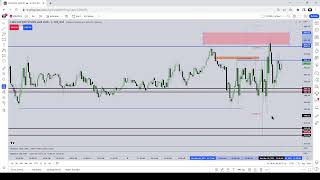
URL: https://www.youtube.com/live/4H74nXabvL0?si=aAmSd0F2cBnoefRl Watched Date: March 8, 2023
Outline
01:46 - The Dollar Index daily chart -.
03:50 - What’s next for the market.
09:57 - Does it make sense for me to push the envelope of risk in an environment that three decades of experience has taught me that it doesn’t
13:45 - How to use the fed chair to get to the point.
20:15 - How the algorithm hides in plain view in plain view.
26:20 - What’s inside the upper portion of the 60 minute for value.
29:04 - What makes these markets really book -.
34:30 - Where do we begin trading this new week?
39:51 - What prevents us from going in and pushing a button today.
42:03 - How do you know how far it’s going to go?
50:11 - Is it complicated when you look at it that way?
56:28 - How to ask the right questions.
01:01:14 - The first two guys are obviously behemoth. They have taken huge chunks of money out of the marketplace.
01:07:35 - If they're going to buy here, they're using a market efficiency paradigm -.
01:13:12 - Repacking the mill -.
01:15:37 - You’re going to find your model before November.
01:22:17 - They feel like they can’t lose -.
01:28:46 - What are the strengths and weaknesses of this model?
01:32:19 - Every trade is a make it or break it trade -.
01:38:42 - Don’t try to be better than everyone else.
On the daily chart, we can see this volume imbalance — the same one I pointed out two weeks ago. I’ve maintained a bullish outlook on the dollar throughout this period, noting that I’m not abandoning the expectation of it reaching up into that volume imbalance above the relative equal highs.
That sets the tone for a risk-off environment from the start — meaning:
- Lower prices for ES, NASDAQ, and stocks in general.
- Lower prices for forex pairs where the dollar index is the second currency (e.g., EUR/USD, GBP/USD).
- Higher prices for pairs where the dollar is the first currency (e.g., USD/JPY, USD/CAD), as these would be considered bullish under dollar strength.
👉
That’s algorithmic price delivery — it has nothing to do with retail participation. And it’s fascinating to see these same behaviors repeat over and over again, even after observing them for more than three decades.
So, a big delivery to the upside — even if we didn’t have Powell’s testimony at 10 o’clock — coming right after a large range day that delivered to a target, cools the jets for me for the week.
Now, I know some of you are action hounds — you’re thinking, “That delivered, now what? What’s next?” But this is where you develop patience and self-control. Powell’s testimony at 10 o’clock could still change everything — it could push the dollar index even higher, driving the indices and foreign currencies even lower today. Or, we could see a retracement back down into this area here.
At this point, I want you to understand my mentality and position: once I’ve reached a weekly objective, I stop. I know that might be hard to believe since you see me trading intraday almost every day, but when a weekly goal like this is achieved, I step back — and I teach my students to do the same.
As a reminder, this week is Non-Farm Payroll protocol week, meaning this Friday is the NFP release. I don’t trade that day, and I don’t recommend that any of my students do either.
I just don't think it's a worthwhile venture to take on the risk that comes along with trading on the Thursday and Friday of Non-Farm Payroll weeks.
The reason why — and this is for those who are actually trying to learn, not just spectate like it’s Netflix — is something you should note in your journal: Non-Farm Payroll weeks typically (though not always) occur on the first Friday of every month.
Now, last Friday in March didn’t have the Non-Farm Payroll release, so this week is the one. That means Thursday(tomorrow) and Friday are both no-trade days.
Some of you might be panicking, thinking, “That’s two whole trading days I can’t trade? I’ll just go trade something else!” — and if that’s you, fine. But as an educator who’s been doing this much longer than most of you, I have to enforce rules — both for myself and for my students.
This builds discipline, and here’s the key takeaway:
👉 The probabilities for precision drop sharply on the Thursday and Friday of Non-Farm Payroll weeks.
So the protocol is this:
When there’s a Non-Farm Payroll Friday, your job as a trader is to finish all your business by Wednesday morning (New York session). Once 11 a.m. hits, you’re done. No trades, no buttons pushed.
Now, does that mean you can’t study or demonstrate? Of course not. But if you’re trading live funds, I strongly advise against trading Thursday and Friday.
Yes, the market will move. Yes, there will be setups. But after three decades of testing, I can tell you: precision and consistency collapse during those two days.
So, as a rule-based trader and analyst, I must create protocols that protect the trader in me — and that same logic applies to you.
Inside every trader, there are three people:
- The Analyst — the planner, the one defining direction and bias.
- The Trader — the executor, managing entries, exits, and risk.
- The Gambler — the impulsive side that wants to push buttons “just to see what happens.”
Your job is to let the Analyst guide the Trader, and to keep the Gambler out of the driver’s seat.
Because that gambler will destroy you — taking trades out of boredom, curiosity, or ego. And especially during volatile weeks like this, when temptation is high, that mindset leads to disaster.
I’ve been there. I’ve blown accounts — plural — on these exact weeks, trying to force something because I believed the hype: “Big moves! Volatility! This is where the money is!”
But it’s not. It’s where manual intervention takes over, where markets behave erratically beyond what the algorithmic structure would typically suggest.
Recognizing that and standing aside is not weakness — it’s strength.
Knowing when the odds are against you and respecting that is what separates a disciplined trader from a gambler.
That’s why I teach my students, and why I personally stay on the sidelines every Thursday and Friday of Non-Farm Payroll weeks.
And traditionally, if I have nothing open by Wednesday morning, I’m done for the week. Occasionally I might trade into the lunch hour, but not this week — because we have the Fed Chair testifying at 10 a.m.
We have a small little fair value gap here in the form of a Sell-side Imbalance Buy-side Inefficiency (SIBI). Price traded up into that range around 9:30, hit it beautifully — perfectly — and then came back down, sweeping the new week opening gap.
After that, price returned to touch the 60-minute fair value gap. We also had relatively equal highs here — so naturally, liquidity was resting above that area. Price ran into that, taking out the buy-side, trapping traders who went long, and then dropped back below the lows into a rejection block.
That likely stopped out or forced many of those traders to scale out this morning. As for me, I don’t have a clear indication right now as to how I’d engage this — so we’re basically just observing at this point.
Look at the flurry of action in here — all that rapid back-and-forth movement. There’s nothing we could have done here.
If you look at the 9:30 high, here’s what I want to do — point out things that are noteworthy for your journal, showing the exact points of reference I’m talking about, so you can go back and study them after the session closes.
Notice this wick — it ran up into that fair value gap, taking the buy-side liquidity. Once it did that, watch what happens next:
Where does price return to? Yes, it touches the bottom of that 60-minute fair value gap — that’s perfectly fine, that’s permissible.
But focus on where the candle bodies are forming in relation to that wick.
Look at that — a beautiful return to the NWOG. It’s beautiful.
Most viewers watching this see randomness — but that’s not randomness, that’s algorithmic precision.
Price goes right to that level. The wicks can do the damage; they’ll go just outside the lines, and this is how the algorithm hides in plain view — right in front of everyone watching price.
And yet, there are still strong deniers out there saying there’s no algorithm controlling price — even though there’s so much evidence to the contrary.
Why anyone would still wrestle with that idea is beyond me.
Now, take Powell out of the conversation — say that wasn’t a factor this morning.
This run-up into that 60-minute fair value gap would’ve been a short for me.
I would’ve hit that as soon as it tagged the level.
Why? Because we’d already taken the buy-side liquidity here, and it also ran up into the next premium, which is that fair value gap above.
So I’d feel comfortable shorting there, with the idea that price would rebalance that fair value gap.
At one point, when the candle was bold green, full-bodied, no wick — touching that level — it would’ve looked terrifying to the average trader.
It makes no sense to most people to sell into strength like that.
And that’s exactly why, as a developing student studying these concepts, you have to build that thick skin — the conviction to act when the setup is valid, not when it feels comfortable.
You can’t beat the truth. You can contort it or twist it, but I’m laying it out—showing exactly what you should expect to see in price. If there weren’t an algorithm, these behaviors wouldn’t unfold the way they do. They repeat—often within the same 10-minute windows, during specific hours of the day, on specific days of the week, in specific months, and with consistent seasonality. The data doesn’t lie.
When you watch it live and anticipate these moves, you begin to expect them—because a control mechanism is operating. It’s not just “buying and selling pressure.” If markets were a free-for-all, a hostile entity could simply dump capital and crash our equities market. That vulnerability alone argues for control. Markets are a business; businesses run on processes—an algorithm. Don’t fear that it’s “rigged”; be grateful. If it were truly random, no one could beat it consistently.
When I first realized control existed, I was angry and blamed it for my losses. The truth: I lost because I didn’t know what I was doing. That’s responsibility versus excuse. Critics say, “My cousin’s uncle at a bank doesn’t trade like this.” They’re indoctrinated by their training—focused on tools that have no real bearing on price. Strip those away, peel the onion layer by layer, and you’ll see the same precise behaviors repeat too frequently, too consistently, to be anything but algorithmic.
Where did we close the previous week on Friday? And where did we begin trading this new week on Sunday? Between those two price points, there’s uncertainty — and uncertainty creates opportunity.
Wherever there’s a difference of opinion, that’s where trading takes place. One side believes price will go higher; the other believes it will go lower. That means you have both a buyer and a seller — and that’s the reason the New Week Opening Gap (NWOG) works.
There’s a genuine liquidity void — a separation between the two price points: the previous Friday’s close and Sunday’s opening price. The market algorithm delivers price to fill that void, bringing buyers and sellers into balance.
You might be fortunate enough to catch a move that rides into those levels — but understand this clearly: you didn’t push it there. None of the traders who were on the right side of that move pushed it there either. It was going there regardless.
That’s the part most people don’t understand — and it doesn’t matter who you are or where you work. The reality is that this happens every single day.
Price moves into that range between Friday’s closing price and Sunday’s new opening price to offer fair value to the marketplace — but not for you and me. It’s for large fund interests.
Smart money isn’t trading one contract or chasing five handles in a day; they’re putting on size. And when size enters, it requires a counterparty — someone equally, if not more, interested on the opposite side. The market delivers that counterparty algorithmically.
When price reaches those key levels — and it will, because it’s designed to — large funds either enter or get taken out. That process provides the liquidity the algorithm needs to balance the books for the entities that truly drive markets.
And no, that’s not the traders at UBS, Citi, or Credit Suisse. We’re talking about a level above them — the entities that never show their hand, never appear on CNBC, and never post charts on social media.
That’s why you don’t hear this discussed publicly. They’re not supposed to teach you this. But here I am — explaining it, showing it live, in a language I created to help you see what’s really happening behind the curtain.
We’re at the midpoint of that long wick, which marks the consequent encroachment. My focus is right there — watching that level.
Just one tick below consequent encroachment, look at the reaction — that movement is tradable. That’s algorithmic delivery in action.
Even in a messy or “sloppy” market, you can still recognize these repeating signatures. That’s the advantage of what we’re doing together today: learning to see the hidden order inside apparent chaos.
What prevents us from executing trades right now is the uncertainty introduced by the market maker — the entity that controls the algorithm and can manually intervene when necessary, halting the algorithm’s macro delivery and repricing the market at will.
When the Fed Chair is speaking, that intervention risk increases. I don’t know when or how that will happen — which is why I step back, observe, and don’t engage. Observation keeps me sharp, close to the market, but disciplined.
For you, as a developing student, this is an essential exercise: learn to watch, not chase. This practice teaches you to read the science of algorithmic behavior rather than acting impulsively or pursuing short-term profits.
It delivered from here all the way back up into the 60-minute fair value gap.
Where’s the buy-side liquidity resting? — Right above here.
We’ve already traded all the way down into the New Week Opening Gap low, and now price is back inside the 60-minute fair value gap. The buy-side above has already been taken — so that’s not our focus anymore.
What we want to see now is:
- Does price want to reach above this current high and trade into this order block?
- Could it even travel all the way back up to the high end of that same 60-minute fair value gap?
Since price has already pierced both of these prior lows, the question becomes:
“What was resting below those lows?” — Sell-side liquidity.
So how far can it reach below? How do we gauge that distance?
ICT explains — it’s guided by key gaps:
- New Week Opening Gaps (NWOGs)
- New Day Opening Gaps (NDOGs)
- Opening Range Gaps (ORGs) — the space between yesterday’s close and the 9:30 a.m. New York open
Those three reference points give the algorithm its structure for how far price can reasonably extend before reverting or rebalancing.
We have two relatively equal lows here. What’s resting beneath them? Sell-side liquidity — a cluster of sell stops.
Traders who are long will place their protective sell stops just below those lows to safeguard their positions. Meanwhile, breakout traders — those looking to short weakness — see a move below those lows as confirmation to sell.
So what I teach you is that we attack that liquidity. The market seeks out those stops — it’s engineered to.
But the common question I get is:
“How do you know how far it will go once it drops below those lows?”
“If you’re looking to buy below them, where do you place your stop?”
This is where contextual information — like the New Week Opening Gap (NWOG) — becomes invaluable.
If we expect price to dip lower, we can anticipate that it will likely draw toward the NWOG. That level was already visible and marked on the chart — not hidden, not off-screen. It provided a logical downside draw below those equal lows.
So when price reaches beneath them, what’s sitting there is layered sell-side liquidity — a pool of stops that you, as a developing trader, can’t see directly but must learn to anticipate. That’s where the algorithm seeks liquidity — and where you prepare to act.
The Depth of Market (DOM) — that visual display showing how many buy and sell orders are stacked at each price level — can be deceptive.
Those orders you see aren’t always genuine interest. They can be spoofed.
Spoofing means placing a large order with no real intention of letting it fill. The moment price gets close to that level, the order is canceled or pulled away.
It’s a gimmick — designed to manipulate perception. Traders see what appears to be strong buying or selling interest, react emotionally, and position themselves based on that illusion.
So the takeaway: don’t rely on the DOM as proof of real liquidity. What matters isn’t what’s displayed — it’s where the algorithm is programmed to deliver price, and that’s always toward resting liquidity, not the spoofed orders flashing on your screen.
Below these two equal lows rests sell-side liquidity — a pool of stops from traders protecting long positions and breakout sellers waiting to short weakness.
So, how far can price drop below those lows?
There are three primary reference tools for gauging that depth:
- New Week Opening Gap (NWOG)
- New Day Opening Gap (NDOG)
- Opening Range Gap (ORG) — the difference between the prior session’s close and the new session’s open.
These levels act as draws on liquidity.
When the market drops through equal lows into one of those levels — say, a New Week Opening Gap — and wicks one tick outside of it, that’s intentional. ICT calls these little wicks “Mohawks” — tiny extensions beyond structure that create the minimum difference needed for the algorithm to register displacement and rebalance liquidity.
Everything makes sense when viewed through this algorithmic lens — not through patterns, harmonics, or Elliott Waves that try to retrofit randomness into structure.
The market only moves for a few simple, logical reasons:
- Upward movement happens to reach buy stops above old highs or to rebalance inefficiencies like fair value gaps (FVGs).
- Downward movement happens to take sell stops below old lows or to fill inefficiencies.
- If it’s doing neither, it’s consolidating — especially ahead of major events like Fed speeches or news releases, when uncertainty dominates.
So the entire market structure can be summarized in three states:
- Expansion upward — targeting buy-side liquidity or inefficiencies.
- Expansion downward — targeting sell-side liquidity or inefficiencies.
- Consolidation — equilibrium before the next move.
That’s it. It’s not complicated.
If you’re bullish, look for one of two things:
- Buy stops above highs / equal highs, or
- Premium fair value gaps to rebalance into.
Price goes up for stops or inefficiencies — nothing else.
Simple, mechanical, and consistent.
There’s nothing here you should feel overwhelmed by — the problem is that most people try to learn it too fast. You can’t rush this process. It takes time, and more importantly, it takes observation — sitting quietly and watching price action unfold.
When we were down here, I told you: “Watch that wick.” That wasn’t cherry-picking. That was me directing your attention to a specific price level — not a zone, not a range — a precise point on the chart.
That level was the midpoint between the closing price and the low of that candle, known as consequent encroachment.
As that candle dipped down, I said:
“Watch that level right here.”
Then I added:
“We want to see price trade back above, deeper into the 60-minute fair value gap — the pink shaded area.”
And specifically, we were aiming for the buy-side liquidity resting above those highs. Why? Because that 60-minute fair value gap had already been used multiple times. So if price was returning upward, it wasn’t going back there just to rebalance that inefficiency again — it was heading up to clear the buy stops sitting above.
Was any of that complicated? No. The logic is simple. You were shown where, why, and how — all based on specific price levels, not zones, patterns, or opinions.
What you’re feeling — that sense that it’s complicated — isn’t about the concepts themselves.
It’s that you want to be able to do what I’m doing right now, instantly. You want to replicate execution-level precision before you’ve built the foundation for it.
That’s not going to happen overnight.
It takes time — and more importantly, time spent doing exactly what we’re doing here:
Watching, reading, and interpreting price action without trading it.
When you’re not in a trade, you’re emotionally detached — there’s no profit or loss affecting your judgment.
You can focus purely on behavior, structure, and reaction — the “tells” of algorithmic delivery.
That state — calm observation without attachment — is exactly where true understanding forms.
You must learn to read price before you trade price.
You can’t reach this level of precision by just watching a few videos and thinking you’ve got it.
You have to be in the charts — actively observing, annotating, testing, and reflecting.
That’s why I openly separate and divide people. I’m intentionally divisive, and I don’t apologize for it.
Because I want to see immediately who’s weak-minded, who’s impatient, who can’t handle the long lectures and the constant repetition.
If you can’t sit through the process — the slow grind of understanding — you won’t make it here.
The ones who stay, who listen, who endure the jawboning and the details — those are the ones who develop real mastery.
What would 20 candles do for you?
What if you just caught five handles out of that move?
That’s what I teach all my students — five handles is a low-hanging objective when you’re first starting.
It’s realistic, it’s repeatable, and it builds consistency. You’ll see five-handle moves multiple times a day, but you won’t recognize them just by watching a video.
You have to live in the charts — watch price paint, study how it reacts at specific times of day, and key off the right context.
For example, earlier when I outlined the sell-side liquidity below those relative equal lows, price reached down into that area — a beautiful, precise delivery.
Later, when it rolled back up and made one more attempt downward, there was no reason to expect continuation.
Why? Because the algorithm had already done its job — it raided sell-side, delivered to a logical level, not a random zone.
These levels were already on the chart before the move happened.
So when I take your attention to that specific point — that failure swing — you can now anticipate it.
Once you understand the foundation, it’s no longer guessing.
Price went below the lows, completed the sell-side, and then sought an opposing liquidity — a buy-side target or an inefficiency (like the remainder of that 60-minute fair value gap).
Smart money was buying below those lows, not panicking.
And notice — right as it tapped that level, it respected the midpoint of the wick — that’s the consequent encroachment, the algorithm’s equilibrium point.
The consequent encroachment that sits below this low and that low — that’s where the algorithm is referencing.
It’s not looking at your stop-loss or mine. It doesn’t “see” our positions. It doesn’t know how many stops your broker shows or where retail traders are positioned.
The algorithm doesn’t think like that. It simply refers to these structural points — these PD arrays — and reprices accordingly.
So when the market trades back down below those lows, it’s moving into a discount and a consequent encroachment level.
There’s no reason to go further down — it’s already fulfilled its purpose:
it’s repriced into the new week opening gap, purged the sell-side liquidity, and returned to a reference point where smart money accumulates longs.
If they’re going to buy, and they’re following what I teach — the Market Efficiency Paradigm — then they’re buying below the market, where sell-side liquidity rests.
And later, they distribute those longs into buy-side liquidity, which is resting above the market — willing buyers at higher prices.
That’s how smart money operates:
- Buy into sell-side liquidity below equal lows.
- Sell into buy-side liquidity above equal highs.
They’re not afraid of a little dip below the lows — they know the algorithm already did its job.
So when I called this out live, it wasn’t hindsight. I said it in real time — “watch this level.”
And what happened? Exactly that.
Smart money bought that discount and held it with one purpose:
to sell it to those buying higher, at the next premium — the remainder of that 60-minute fair value gap above.
They don’t care about harmonic patterns, Elliott Waves, or indicators.
They’re watching inefficiencies and liquidity — nothing more.
Smart money sees this as buying sell stops at the most opportune time —
the precise time when everyone else is scared.
The algorithm doesn’t know how many buy stops are above, it doesn’t need to.
It’s coded to buy cheap and sell dear.
And that’s what we do here:
we target the uninformed, the defenseless positions, the traders who don’t understand what’s really happening.
This is not a polite game — this is war in the marketplace.
When I’m buying down here, I’m doing exactly what smart money does.
We want to see price deliver back up into this hourly SIBI,
and more specifically into its upper half.
Why? Because that portion — from this high up to the top of the shaded area — has not yet been repriced to.
Price only traded through it once before, reaching about a quarter of that range.
Think of it like this:
the range of that hourly fair value gap (the SIBI) was repriced up to that first quarter,
and then this next high here extends delivery further into that range.
So what remains — the upper portion of that imbalance —
that’s the part the algorithm still “sees” as unfinished business.
You might be distracted by all the other highs and wicks on the chart,
but I’m teaching you to ignore the noise and focus only on the area that matters.
The algorithm isn’t referencing every candle —
it’s referencing the inefficient portion that hasn’t yet been delivered to.
That remaining unfilled segment of the SIBI is where price is drawn,
because according to the efficiency model,
price must reprice into that area to fully balance delivery.
It does two things:
first, it completes the redelivery into that imbalance,
and second, it goes directly for the buy-side liquidity I told you it would aim for.
And isn’t it convenient?
Isn’t it almost too perfect how the market just happens to run right up there,
clears those buy stops,
and then immediately begins retracing back into the range again?
That’s algorithmic precision — not randomness.
Price fulfills its purpose, purges the liquidity above,
and then efficiently rebalances itself back within the prior range.
I tell you exactly what to look at and exactly what price is aiming for. I’ve been doing this for months. My private students have seen me call it on the daily chart just the same way, and it works on every timeframe — one minute, five minute, even on second charts. You can’t find anything better than this. This is the market, exactly how it operates. If that upsets you, that’s fine, but this is the truth.
If you want to understand how markets actually move, you’re in the right place. This is where we talk about the technical science that actually works — the real logic behind price. The precision is undeniable and unmatched. When you see it unfold live, day after day, week after week, it’s addictive. You can’t imagine trading any other way.
Even in a messy, range-bound market like this, it’s not chaos. It’s all scripted. On better days, when the Fed Chair isn’t speaking and causing distortions, you’ll see clean trending days where you can add to your position and hold until the range extremes are met.
Some of you will decide that’s the model you want to trade. That’s perfect. The goal is for each of you to find your own model before November — the approach that makes sense to you personally. Every session I do, you’ll see something that resonates, a concept or setup that clicks and feels natural to your way of seeing price. When that happens, commit to it. Don’t tinker. Don’t add unnecessary tools just because you hear new ones later.
You’re not here to impress people or perform on social media. You’re here to build a skill that pays bills and gives you control of your life. Stop worrying about outside opinions — none of that matters.
This year is the last stretch. I’m done mentoring after the second Friday in November. That means you have to show up now, take notes, and do the work. I promise you, by November, you’ll know exactly what you’re doing — but only if you show up and focus every single day.
The market always goes where the money is. If there isn’t enough liquidity there, it will be engineered — that’s how it works.
Think about that high right there. Above it are buy stops — someone like retail trader Rick went short around here, and because every trading book tells him to “put your stop just above the high,” that’s exactly what he did. At first, price moves in his favor, and he feels confident. It dips lower, consolidates, maybe even looks like it’s about to collapse. He’s thinking, “Alright, just a little more patience, it’s finally working.”
But what he doesn’t realize is that his stop — along with thousands of others — is now part of the liquidity pool the market is targeting.
He traded using logic that doesn’t work. He doesn’t know what a new week opening gap is, he doesn’t understand liquidity, and he doesn’t recognize that today’s market is going to consolidate because of the Fed. The market already delivered its move earlier in the week — it hit the dollar objective. It’s also Non-Farm Payroll week, so there’s no urgency for big money to step in.
What major institution is thinking, “Let’s take all our clients’ assets and put them at risk right before payroll Friday”? None. That’s not how this business works. But a lot of retail traders approach it with comic book logic, when what’s needed is a PhD-level understanding of human behavior — how people react under pressure, and how they behave when they feel invincible.
That’s why we see sudden reversals. The market doesn’t want retail traders to realize they’re wrong and close early. It’s like spoofing in the depth of market — orders appear, but before traders can pull them, price runs through aggressively. They have to do it quickly to use those traders as counterparty liquidity while unloading long positions.
All of this unfolded exactly as I explained. It’s not complicated. What makes it hard for most people is their impatience — they want to push a button and make money right now. They measure success only by immediate profit, and that mindset guarantees failure.
If you’re here to learn, you shouldn’t be trading live this year. Close your live account. Because the moment you see me have a strong run, you’ll feel the urge to copy — and that’s where people destroy themselves. You’ll see me calling moves in detail, ahead of time, and executing precisely, but if you try to mirror it without understanding the logic, it becomes gambling.
Even if you win, you won’t learn anything from it. And when you inevitably lose, you’ll panic, second-guess, and exit at the worst possible moment — usually right before price moves in your original direction. That’s why copying others, including me, is a mistake.
If you truly know you won’t be disciplined and just want someone else to provide signals, that’s a different story — but don’t confuse that with learning how to trade.
They’re taking trades in forex — trades I’m not even discussing right now — and when it doesn’t go their way, they say, “Well, you told me this happens.” No, you took that trade. You’re the one who clicked the button. That’s part of trading — ownership. You can’t blame anyone else. Every mistake is an opportunity to learn, but only if you take responsibility for it.
If you don’t love being in the charts — if you don’t enjoy watching price move in real time, replaying old sessions, and studying every small detail — then I’ll tell you the truth: you won’t make it. You’ll fail. You’ll blow your account. You’ll fail your funded challenge, or even if you pass it, you won’t keep it.
This business requires obsession. You have to love candlesticks. You have to love watching price paint. You need to hate weekends because the market is closed, and when it’s open, you should feel alive watching every tick. That’s the kind of passion it takes to survive in this game.
Because if you don’t have that fire, you won’t last through the losses. And there will be losses — even with everything I teach, even with perfect logic, you’re going to lose sometimes. I lose too. Everyone does. It’s part of the cost of doing business.
Most traders fail not because they lack knowledge, but because they can’t emotionally handle the uncertainty — the constant pressure, the waiting, the setbacks. If you can’t embrace that uncertainty and still love the process, this business will eat you alive.
You want to know where you’ll never get hurt, where you’ll never take a loss?
That place doesn’t exist.
If you think there’s such a thing as perfect trading — where you never lose, always catch the top or bottom, and know every move before it happens — then you’re in the wrong field. Go back to school, because that fantasy doesn’t belong in this business.
You can’t be in every move. You need sleep. You’ll get sick. You’ll have family responsibilities. Some of you work full-time, run businesses, or study. Life happens. So stop holding yourself to impossible standards. You’re pressuring yourself over things that don’t matter — they’re just tiny pebbles in your shoe. Take them out, keep walking, and focus on progress.
Many of you are trying to learn faster than I expect you to. But I’m the instructor — if I’m not expecting that level of mastery yet, why are you? It takes time to grow into this. Patience builds responsibility, and that’s what you need.
If you can’t develop that patience, it doesn’t mean my concepts don’t work, or that “the algorithm changed,” or that “it’s become retail.” It means you’re not ready yet.
It took me years to truly understand what I was seeing — and even then, I still made the mistake of tinkering with what worked. That’s why I tell you: once you find your model, stick with it. Even if it doesn’t give you a setup every day, stay with it. That model will teach you more about discipline and timing than any new concept ever will.
Master one thing — just one.
Maybe it’s buying in a fair value gap, shorting from one, trading a breaker, or aiming for liquidity on either side of the market. That’s enough.
Just because I have dozens of tools and models doesn’t mean I use them all at once. You only trade what’s visible in the chart. If it’s not there, don’t force it.
This isn’t complicated. You just make it complicated by rushing.
And look at what we did today — I gave you a real-time example on a day that was already expected to be choppy because of the Fed chair’s comments. It played out perfectly. But that’s because I knew the conditions.
You have to know your economic calendar. Tomorrow’s Thursday — data day for Friday. And Friday? It’s Non-Farm Payroll day. That’s a wild card. The market can go anywhere it wants, and no technical model can account for manual intervention.
When that happens, even ICT can’t beat it.
There are certain times of the month — around key calendar events — when precision will simply evade you. It doesn’t matter how long you’ve been trading or how skilled you think you are. I’m the author of these concepts, and I’m telling you: on those days, precision escapes everyone.
Sure, once in a while, I might call the exact low and catch the move all the way to the high on a Non-Farm Payroll day. It happens. But does that mean it’s consistent? No. Most of the time, those days are unpredictable. Sometimes NFP barely moves the market — just a few choppy swings around 8:30 and then flat. Other times, it rips for hours. You can’t build your trading identity around that randomness.
One day doesn’t define your career. One trade doesn’t determine your destiny. Yet most traders treat every single trade like it’s make-or-break — music blasting in their heads, adrenaline pumping, acting like it’s a movie climax. It’s not. It’s just a trade.
If you lose, who cares. If you win, who cares. That’s the mindset of a professional — complete indifference to the outcome. Professionals don’t over-leverage, they don’t chase validation, and they don’t need a dopamine hit from social media likes. They’re in this game for consistency, risk management, and longevity.
Losses happen. They’re part of the cost of doing business. The difference is professionals accept that. They don’t post losses online to fuel shame, and they don’t post wins to feed their ego.
Because here’s what happens: you share a win, everyone praises you — dopamine rush. You take the next trade, it loses. Now you feel deflated. You try to win it back, lose again, and suddenly you’ve gone from +4% to -6%. You won’t post that part, will you?
Don’t set yourself up for that emotional crash. Keep your trading private. Your progress, your results, your setbacks — they’re personal.
And especially when you’re learning, don’t share your results publicly. You won’t get real help. You’ll attract jealousy, noise, and negativity from people who don’t want you to win.
Don’t give miserable people the satisfaction of judging your journey.
Don’t look for outside cheerleaders — you need to be your own.
Your confidence should come from your journal, not from other people. That trading journal you’re building this year will become the best trading book you’ll ever read — because you wrote it. It’s not theory, it’s not someone else’s screenshots or hindsight analysis — it’s your lived experience.
It’ll contain your real notes, the moves you spotted, the setups you studied, the mistakes you made, and the wins you earned. You’ll document the days you watched price unfold exactly as you anticipated, the sessions you backtested late into the night, and the lessons that finally clicked after months of confusion.
Eventually, six months or a year from now, you’ll look back through those pages and see your own evolution. You’ll move from passive study to active engagement — from watching to executing, even if only on paper.
That’s the foundation of self-belief. That’s where true confidence comes from. Not from applause, not from validation, but from the private record of your own persistence and progress.
You have to look at yourself through the mirror these markets hold up to you — because they will show you exactly who you are.
And what you’ll see might shock you. You’ll discover flaws you didn’t know existed. You’ll find out you’re not as patient as you thought you were, not as disciplined as you believed, not as emotionally stable as you hoped. That mirror doesn’t lie — it reflects every weakness, every impulse, every ego-driven mistake.
But that’s also the opportunity. Those flaws are the blueprint for who you can become. The markets will break you down — but only so you can rebuild yourself stronger, sharper, and truly disciplined.
When you finally master this craft, one of two things will happen.
Either you’ll become intoxicated with power — because you’ll realize you can sit down any day of the week and make in one trade what others make in a month. You’ll feel unstoppable. That kind of control over outcome, over your own financial destiny — it’s addictive. It can turn you into the biggest egotistical prick imaginable if you’re not grounded.
Or — you’ll take that same skill, that same precision, and you’ll look at it with gratitude. You’ll recognize it for what it truly is: a gift. A tool that can change not just your life, but the lives of the people around you. You’ll approach it with humility, with a sense of stewardship, not arrogance.
Those are the two paths every successful trader faces: power or purpose.
The difference isn’t in the charts. It’s in your character.
And that’s the real test most traders fail — not the technical side, but the personal one. Because this industry has too many people acting like heroes, flexing profits and pretending to be invincible. The truth is, real power doesn’t need to shout. It shows up quietly, through consistency, discipline, and grace.
It’s going to be hard for some of you — really, really hard. Because you’re going to find a skill set you didn’t even know existed. You’ll discover an ability to make money at a level you’ve never experienced before. And that’s where the danger begins.
New money changes people. It makes you believe you’re more than you are. It inflates your ego, blinds you to your own flaws, and turns confidence into arrogance. I went through that when I was younger — I thought my success made me untouchable. I started believing I was better than everyone around me. That’s what “new money” does — it whispers lies in your ear until you start acting like someone you don’t even recognize.
You’ll start to justify your arrogance. You’ll look around and think, “Look what I can do now. Look what I’ve built. I deserve to act this way.” But that mindset poisons you. It makes you cold, detached, toxic — and the worst part is, you won’t see it happening.
When I was younger, I sought validation from everyone — because deep down, I couldn’t get it from where I wanted most. A loved one passed away before seeing who I became, and that absence still aches. No amount of success fills that void. And if you let the hunger for validation control you, it will consume you.
The public won’t give you what you think. You imagine they’ll praise you, lift you up, call you a genius — but that praise is fleeting. It’s hollow. It fades as quickly as it comes. Living for approval is a trap.
The only life worth living is one rooted in principle and purpose — using your success to uplift others, not to diminish them.
Understand something: I know what I am. I know there isn’t a trader on this planet who can do what I do better than me. But that confidence doesn’t give me the right to belittle anyone. That’s why I teach. That’s why I give you my time, my knowledge, my life’s work. Because the real significance doesn’t come from being above others — it comes from raisingothers.
And some of you — I know it — will take this gift and misuse it. You’ll let power corrupt you. You’ll become the person I once was. And years from now, you’ll look back and realize how much you lost by trying to prove how significant you were.
True significance isn’t found in showing off your success.
It’s found in helping someone else rise.
The market moved — just enough to give us what we were looking for. That’s all that mattered today. Small, simple, precise. Once it delivers what’s expected, your job is done. Step aside. Be content.
Even in your studies, that’s the discipline you must build — contentment. Don’t chase more just because the candles are still moving. When the setup completes, stop. Close your charts. Annotate what happened. Reflect.
Say to yourself, “We ran a live experiment today. The market behaved logically. It did what made sense.” That’s progress. That’s mastery — not needing to be in every move.
While everyone else stays glued to their screens, desperate to predict the next tick, you can walk away knowing you already got what you came for. That’s real power — the ability to stop.
That kind of calm comes from understanding the day’s profile. When the probabilities are 50/50, it’s no longer trading — it’s gambling. You’re not here to gamble. You’re here to execute when the odds are clear.
So when the move is done, accept it. Don’t wait for more.
Turn your charts off. Walk away. Let it go.
And tomorrow — come back sharp, patient, and ready again.
Keep learning with us.
Get new ICT lessons, study notes and updates as we build V2.