
Trading In High Resistance Liquidity Run Conditions - July 21, 2026
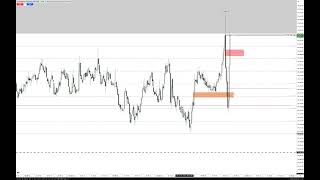
This is the Regular Trading Hours Opening Range Gap low.
Date: 2026-07-21
URL: https://youtu.be/tp0qkiWCctw?si=8sQ5EigyXf5zrcDT
Loading post from X…
A preserved copy is ready if the original cannot load.
Loading post from X…
A preserved copy is ready if the original cannot load.
Loading post from X…
A preserved copy is ready if the original cannot load.
Loading post from X…
A preserved copy is ready if the original cannot load.
Loading post from X…
A preserved copy is ready if the original cannot load.
Loading post from X…
A preserved copy is ready if the original cannot load.
Yesterday, the market did, in fact, trade down to the objectives I outlined in the pre-market video.
So it went up to go down.
Now look at these lows here.
They’re a little suspect to me.
I don’t think they’re all that strong.
I’d like to see an attempt to rally first, and then see whether we can run down into these lows.
So we’ll see.
So this is a 60-minute, or 1-hour, chart.
Buy-side imbalance, sell-side inefficiency.
I mentioned yesterday that we would likely trade lower, take out those relative equal lows I just showed, and then work our way up into here.
Now, in this area, I want to see price fail to reach into the upper half.
Hit it, then start to break down.
I also like these relative equal lows down here.
And we’re opening with an enormous gap.
It’s a premium gap.
So that’s the previous settlement right here.
This is the Regular Trading Hours Opening Range Gap low.
There’s the run-up into the 60-minute buy-side imbalance, sell-side inefficiency.
And there is today’s 9:30 opening price.
So we’re opening up in here.
live trading in here: https://youtu.be/tp0qkiWCctw?t=199
[30:22]
You can see how people can lose their minds doing this.
That’s why I teach using the economic calendar, market structure, day of the week, time of day, and the very specific draw on liquidity that’s obvious on the daily chart, obvious on the 4-hour chart, and obvious on the 1-hour chart.
Those are the ones that are really going to—
[30:52]
And that right there just went over most people’s heads.
They’re not even going to write that down in their journal.
But they’ll watch this video years later, come back, and say, “I don’t remember hearing that. That’s a really good point.”
Exactly.
Those draws on liquidity are the best because you’re blending several things together.
And that is what promotes a low-resistance liquidity run because it’s so easy and so obvious.
When you’re trading with real money, you’re in a trade, and your stop-loss is very close to being hit, price doesn’t just drift toward your stop-loss.
It runs directly to it.
Quickly.
[31:29]
That’s because the stop-loss is an obvious draw.
When price runs toward something obvious within market structure, it doesn’t go there gradually.
It goes there quickly because they don’t want people taking their money out of the market, protecting themselves, or minimizing their loss.
They don’t want them to be able to do that.
They want them to take the largest loss available to them.
So they’re going to run quickly for that liquidity or go directly to the order, which could still happen to me here.
[37:07]
We had the bodies trade below here.
We only went a tiny bit below that level.
So I’d like to see it build a little more momentum and start laying bodies beneath this area, stretching it out.
That’s what you want to see.
There’s another key level down here.
If we can get price to deliver to that, that would be nice.
But right there, I told you earlier, when I had my stop up there, that if I were price, I would run directly back up to those levels.
[37:33]
That’s why I wanted to bring the stop down, because price went lower here than it did there.
So this group of bodies is below this group of bodies, even though wick to wick, price only went slightly lower.
The bodies are telling the narrative.
It wants to go lower.
It wants to do that, but not before the real move gets stopped out with this.
So this is a very, very classic type of scenario.
Yeah, see how it keeps going down, down, down, but just won’t rip below it?
The half-gap down here is what we’re looking for.
It’s just dipping its toe in.
[38:16]
And it’s not fun to trade these types of markets because you want to see immediate feedback that you’re onside.
And if you’re brand new, it’s hard to get that read.
[38:44]
But if I were them, I wouldn’t be beating myself up.
It’s a difficult day.
It’s hard to win on days like this.
One more chance for it to go from here.
[38:50]
None of my students would have gone back in on this short.
And the reason why is conviction—or the lack of it.
The fact that we spent so much time in here—treat this like a large trading range, okay?
I’m not a breakout trader.
But when price finally leaves this area, a lot of energy is going to follow behind it, and that should propel price down to at least the half-gap.
[40:19]
In other words, it’s going to be violent.
Well, it should be very strong—long, black, stretched-out candles to the downside.
That’s what I expect to see.
And once price leaves this area down here, it should be strong, sharp, and immediate.
Very quick.
Covering a lot of distance in a very short amount of time because they’ve punished everyone in here.
And you’ve watched me get stopped out twice now.
I want to see a nice body close down here so I can take this line off.
Once we leave this area…
Sometimes you simply aren’t allowed to participate in the move.
That’s just the way it is.
Unless you’re going to be hyper-diligent and keep trying no matter how many times you get stopped out, as long as you still believe the short is viable.
But you have to know what you’re doing.
Because if you don’t, you’re going to get wrecked.
These are classic high-resistance liquidity run conditions.
I mean, this is what it looks like.
And it’s hard to work through all of this.
You can see it.
It’s very, very difficult.
Price doesn’t show a willingness to go lower, even though everything indicates that it should or could.
It goes down and then comes right back up against you.
So in my teachings, and when I was running the paid mentorship, our primary focus was identifying when this occurs and then moving to the sidelines.
Don’t participate.
Tape-read it.
Paper trade it.
Demo trade it.
But don’t try to trade it with live funds.
When it isn’t doing these things and it’s moving in a low-resistance liquidity run condition, that’s when you want to engage because it’s obvious.
And when the draw on price is obvious, price moves toward it in a quick, fast-paced run.
So again, as I mentioned down here, we were leaving only wicks, not bodies.
And what is that indicative of?
A failure to launch lower.
Loading post from X…
A preserved copy is ready if the original cannot load.
Keep learning with us.
Get new ICT lessons, study notes and updates as we build V2.