
Sunday, June 12, 2022
2022 ICT Mentorship Live Stream 3
A CPI-driven bearish move illustrates why directional bias alone is insufficient: execution requires the anticipated liquidity sweep and fair value gap entry, while risk management protects against chasing missed delivery.
- CPI
- Liquidity Sweep
- Fair Value Gap
- Directional Bias
- Economic Calendar
- Weekly Opening Gap
- Partial Profits
- Risk Management
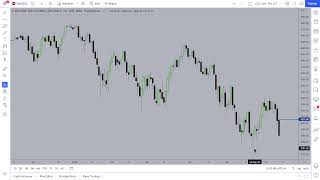 Watch on YouTubeThe original lesson video opens on youtube.com
On this page5 chapters
https://www.youtube.com/live/dXvFQO_Dmtg?si=NX5NxNmxz4DlteYn
Bearish Liquidity Sweep Thesis
[04:18] ICT: I want to make sure you understand what I was outlining earlier so you can come away from last week with a better perspective. You're looking at a daily chart of the E-mini S&P.
We were inside a small trading range, and I was looking for an opportunity for price to run above these short-term highs, similar to what we saw previously when price ran above a high and then aggressively repriced lower.
[05:00] I wasn't looking for a sustained rally. I was anticipating a potential run above those highs followed by a move lower. I had also identified the 4070 level, the relative equal lows, and the fair value gap below. My expectation was that if price began delivering lower, it wouldn't simply take out those relative equal lows and then reverse higher. It would seek the fair value gap.
[05:29] On Thursday, price ran right through and into that fair value gap. On Friday, ahead of the 8:30 CPI release, I was outlining what I wanted to see: a run above the short-term highs, potentially reaching the 4030 level, followed by continuation lower.
[06:19] Why was I thinking 4030? I was watching the one-minute chart with my son, Caleb, and told him I expected price to take out the nearby short-term high. I wanted to see that high swept first, potentially with the 8:30 volatility pushing price as far as 4030, and then look for the sell-off.
[07:16] *That's what I was expecting, and I got it wrong. I wanted price to run above that clean level, knock out the liquidity, and then deliver lower. *With CPI coming out, it could easily have swept those highs before making the bearish move. I was watching a high around 4022, with 4030 as the additional upside level I had publicly mentioned. If price had delivered that movement, I would have looked for a fair value gap entry to participate in the decline, potentially carrying the trade through the morning session and assessing any afternoon continuation afterward.
When No Entry Forms
[08:29] But that's not what happened. At 8:30, price immediately repriced lower. It didn't wait around, didn't provide the manipulation I expected, and didn't give us a setup or entry signal.
[09:38] As I've matured as a trader, I've learned to look at these situations differently.* We were correct about the direction and where price was likely to reach.* Most traders wouldn't have that understanding. They would have the directional bias wrong, wouldn't know what price was reaching for, and would simply be chasing price.
But having the correct directional bias doesn't mean you're guaranteed a trade. I was looking for something specific, and that specific condition didn't occur. That's an important distinction.
[10:12] On Friday, the market simply repriced immediately after the CPI number, and there was no opportunity to participate according to the model. Someone could argue that I was right because price went lower, but I wasn't completely right. I explicitly anticipated a run above the nearby high, potentially reaching 4030, before the decline. I was wrong about that additional upside movement, both publicly on Twitter and privately while explaining the setup to my son.
When price began breaking aggressively lower, Caleb was surprised and thought TradingView might have glitched. I told him it was real, but we probably weren't going to get anything to trade.
[11:25] My approach was to sit back and observe. If price continued tearing lower, we were probably done for the morning, and possibly for the day. On a Friday, if the market has already delivered a substantial portion of its daily range during the morning session, I don't want to force a trade in the afternoon. It's the end of the week, and the market has already demonstrated heavy one-sided delivery.
I had wanted to see price run above the short-term highs and then look for a short. It never did, so I lost interest. I even posted that I wouldn't be trading the afternoon session, and I'm glad I stayed out.
[12:33] If you're new to trading and watched Thursday's and Friday's enormous movements, it's easy to think, "I wish I had been part of that. I should have caught it." Don't beat yourself up over it. I did that constantly when I started trading in 1992.
[13:32] I wasn't able to capitalize on Friday's move either. I'm not saying that makes my experience superior; I'm saying that according to the model I've taught you,* there wasn't an entry.* The movement was immediate. If you were watching it live, once it started repricing aggressively lower, the opportunity was already gone.
[13:59] Think about it like going to see your favorite band in concert. You might have tickets to see them next month and be looking forward to the experience. Are you upset that you missed every other concert they performed before the date you're attending? Of course not. You're looking forward to the opportunity that's scheduled for you.
Scheduled Volatility Injections
[15:07] You can use EconoDay or Forex Factory's economic calendar.
https://www.forexfactory.com/calendar
I like Forex Factory's format because it's easy for new students to understand. When I'm looking for price action opportunities, I'm often studying the economic calendar two or three weeks ahead.
[15:42] Think of the economic calendar like an old-fashioned TV Guide. People used to look ahead at the programs airing during the week and plan their schedules around what they wanted to watch. The economic calendar serves that same purpose for traders.
[17:10] Does that mean I never trade on days without medium- or high-impact news? No, I've traded those days. But I don't place the same emphasis on maximizing leverage when I'm not anticipating the degree of movement commonly associated with those scheduled volatility events.
These releases are known in advance. They're on the calendar, often months ahead. You plan like a professional to study and potentially engage price action around those events.
[17:43] That doesn't mean every scheduled event will create a large movement. Sometimes the market does very little. Non-Farm Payrolls, for instance, used to produce enormous volatility years ago, but there have also been periods where the reaction was comparatively lackluster.
Even though it's a high-impact release, there's no guarantee that it will produce a tradeable move.[19:05] In your journal, don't record that session by saying, "This sucks. I suck. I can't get anything right." The model didn't provide the setup. There was no opportunity. The train left the station without you, and you had to stand aside and watch it go.
Price went in the correct direction, and there was substantial movement. That's something worth studying, not something you should turn into a negative experience.
[19:34] Maybe you had a limit order that price nearly reached before running away. Maybe you weren't waiting for 4030 like I was, but you were waiting for a slightly closer level. I've had countless trades come within a small distance of my entry and then deliver exactly where I anticipated without me.
[20:00] You don't want to beat yourself up emotionally with negative self-talk or go on social media complaining because you got stopped out and price eventually reached your target. If you have all that energy to complain, why not direct it toward studying what happened and determining whether another valid opportunity presented itself?
[21:17] Look for the silver lining in everything. There will be plenty of legitimate reasons to feel discouraged in trading, but this isn't one of them. You didn't take a loss. You didn't get the direction wrong. Price didn't fail to reach the anticipated objective. It did those things and more, but it simply didn't offer an entry.
[21:47] This week, the remaining teaching for the 2022 mentorship model will focus on directional bias and money management. That will complete the instructional portion of the model. It doesn't mean I'm going to stop producing videos or teaching altogether, but the model itself will be complete.
[22:21] I don't want to keep adding things indefinitely. The purpose was to give you something relatively simple that you can study and use. You've already had several months of historical data to backtest and, for those who have been working aggressively, several months of forward observation.
Now you're reaching the point where you need to consider how to manage trades and risk in your demo account and how to incorporate daily directional bias into that process.
[23:25] One of the questions I receive most often is, "How do I know whether it's going to be an up day or a down day?" But I want you to avoid the trap of trying to predict the closing price every day.
You're not ready to do that yet. Over time, if you do the things I'm teaching and acquire sufficient experience, that understanding can develop naturally.
[23:55] I'm going to provide general rules and principles that lead toward that ability, but simply watching a lesson and understanding the words doesn't mean you know how to apply them.
[24:23] Every consistently profitable trader develops a measure of understanding that can be difficult to articulate. They recognize certain things because they've repeatedly observed them over time.
That answer isn't satisfying to someone new who wants to know everything immediately, but you don't need to know everything right now. There are more foundational things you need to develop first, particularly discipline and self-control.
[25:01] If you're rushing or panicking, you're not going to learn this properly. Friday's move is a perfect example. You might see that enormous decline and convince yourself you should have been involved, even though your setup never appeared.
That mindset can prevent you from taking the next proper trade because you're still emotionally attached to the move you missed.
[25:41] You arrive on Monday determined to make something happen because you're angry about Friday. Now you're revenge-driven, even though you didn't necessarily lose money.
[26:19] If trading becomes your only source of satisfaction, your development is going to suffer. You'll become impatient with studying and practicing because those activities don't provide the immediate emotional reward that a winning trade provides.
Renewed Bearish Narrative
[27:53] Let's go back to the daily chart. Thursday and Friday delivered through the fair value gap I was initially interested in. Friday's bearish price leg is extremely extended, but does that mean price has to retrace higher because it's oversold? No.
I think the market is in a hurry to attack the next obvious low, potentially delivering into the 3700s. I'm not saying it has to go there immediately, but that's where my attention is directed. The market failed to produce the upside manipulation I had anticipated above the short-term highs and instead repriced aggressively lower.
[28:33] Look at the difference between Thursday and Friday. Thursday opened, traded higher, created a short-term intraday high, and then moved away from it. Friday didn't produce the same behavior. It consolidated and then rolled over.
NASDAQ behaved similarly. There wasn't much obvious upside manipulation beforehand, just consolidation on the lower time frames followed by aggressive bearish delivery.
[29:06] When I'm bearish and see price consolidating after already moving lower, this is how I interpret it. On Friday, I would have approached that chart the same way every single time, regardless of how many opportunities you gave me to replay the session.
I would have expected price to run above the nearby short-term highs or relative equal highs, establish a high, and then sell off. I would make that same decision every time because that's what the market structure and the scheduled CPI release suggested to me.
[29:43] We were bearish, had already delivered lower, and were consolidating ahead of an 8:30 high-impact news release. I wanted to see price manipulate higher first and then expand lower.
Did I know what the CPI report was going to say? No. Did I even care what the actual reported number was? No. I don't spend time trying to interpret the economic data itself.
[30:16] I've lost money trying to trade based on what fundamental reports supposedly mean. Sometimes a report appears bullish based on its numbers, yet the market reprices aggressively lower. Other times the opposite happens.
[31:31] Those events introduce activity and can be used to manipulate short-term sentiment. If the market is consolidating and I'm bearish, isn't it reasonable to anticipate a run higher first to knock out traders who are already short?
Think about someone who entered short earlier and has watched price move in their favor. Where are they likely to place their stop loss? Probably just above the nearby short-term highs or relative equal highs.[32:01] Those traders might believe they've identified a double top. Sometimes those patterns work, which is why people continue believing in them, but I've seen them fail many times.
With the CPI release approaching, I anticipated that price could run those stops first, potentially reaching 4030, and then begin the real bearish movement. Given the same conditions, I would use that same framework again.
[32:41] Why should I be upset that price didn't provide the entry? I've been trading long enough to know that these conditions repeat. The manipulation, the subtle Judas swing, and the fake move that convinces traders price is going one direction before delivering in the opposite direction—I've seen those things countless times.
There was nothing in Friday's price action, according to the setup I was waiting for, that said I should have been a participant in that move.
Weekly Opening Gap Scenarios
[33:48] Looking ahead to the new trading week, I'm still anticipating lower prices. One of the first things I'll watch when the market opens on Sunday evening is whether we gap down.
[34:29] My initial thought is that the new week could open below Friday's low, creating a gap between Friday's closing price and the new week's opening price. I could be wrong. It might open within Friday's range, but given the bearish delivery we've seen, I think a lower opening would fit the narrative.
Gap down happened but the price was not willing to return to the gap during the week
[35:35] These aren't random Plan A and Plan B drawings where I put one arrow higher and another lower and then claim I was right regardless of what happened.
I'm giving you specific scenarios with conditions that would make me interested in trading. I'm outlining them before the market opens so you can study how I develop a narrative and what I would expect price to do if those conditions form.
[36:29] These are situations I would consider trading with my own money. Should you simply copy them? No. You don't know all the individual elements of the setup that would actually cause me to execute. What I'm giving you is the framework, not every detail of the entry mechanism.
[37:00] My narrative is that price is seeking the next obvious low and potentially lower prices beyond it. We've already traded through the fair value gap and are well below it. Can price retrace higher before reaching that low? Certainly.
But do I think we need to trade above Friday's high before attacking the downside liquidity? No. At least that's not what I expect based on the information presently available.
[38:05] The low below us is obvious. Everybody can see it, including people who use conventional support and resistance. Some of those traders will be looking at that low as a place to buy.
Before Sunday trading opens, all I have is the information available through Friday's close. That means I'm forecasting, and forecasting can get a new trader into trouble if they become married to one specific outcome.[38:40] I'm asking myself whether it makes sense for price to return all the way to the higher levels before taking that lower liquidity. My answer is no, based on the present narrative.
Right now, my analyst is asking whether it's easier to justify going short or going long. Looking at the present structure, I can make a much stronger case for lower prices.
[40:18] Some of you might look at the recent low and high and say, "Isn't price already in discount? Why wouldn't you expect a rally?"
[41:19] Do I need the low to be taken out to make money? No. That frees you from the need for perfection.
When I was first developing these models, I often felt that the market had to reach my exact objective for the trade to count as successful. I wouldn't take partial profits along the way.
There were times when I had thousands of dollars per contract in unrealized profit, only to watch it disappear because I was determined to hold for the final target. I learned that lesson the hard way.[42:25] If you don't protect some of the profit while price is delivering in your favor, you can end up with inconsistent results. You might have several excellent opportunities but repeatedly give back the gains because you're demanding that the market reach one exact objective.
[44:09] You need to frame trades so that even if price doesn't reach your anticipated objective, you can still profit by taking partials along the way. Many traders have been in positions that were substantially profitable before price reversed and stopped them out because they refused to take anything off.
[44:44] If you've ever traded live money, you've probably experienced this. You entered a trade, watched it move into profit, and held everything because you were waiting for either your final target or your stop loss. Then price reversed, and you gave back the entire opportunity.
I don't want you making that mistake simply because someone tells you that taking partials is a bad idea.[45:50] Some traders insist that partial profits are foolish, but I completely disagree. When you open a trade, you have an initial risk-to-reward ratio. I don't even consider that ratio the most important factor when you properly understand what I'm teaching.
[46:18] By negative R, I mean you might risk two dollars to make one dollar. People hear that and immediately think it's ridiculous, but I've demonstrated that kind of approach to Caleb many times.
The important question is how much actual account risk you're taking. If you're risking twice what you're trying to make on an individual trade, does that mean you're risking 2% of your entire account? Not necessarily.
If you're a new trader who doesn't yet understand where price is likely to go next, how can you realistically expect to use an extremely tight stop during volatile market conditions?[47:28] You're asking to fail if you try to imitate that level of precision before developing the experience to support it. People often make those claims because they want to look exceptionally intelligent or skilled.
[47:57] I'm not trying to be better than the next person. I'm trying to improve what I'm doing and make more money than I had previously. That's the mindset I want you to bring into your studies: work on becoming better each day.
[49:09] When you spend weeks and months doing that work, you'll naturally begin seeing the same behaviors repeat. Eventually, you'll develop enough experience to recognize that opportunities appear every week and every month.
That's what reduces the urgency and frustration you experience when you miss a move. Right now, you don't yet have years of firsthand experience watching these patterns repeat. You're only beginning to develop that foundation.
[49:45] Once you have that experience, you won't feel the same impulse to act immediately. And if you do feel rushed while trading, it's probably a warning that you're about to make a mistake.
[50:16] If something is clearly wrong with a trade, you're allowed to act immediately and close it. Even if that means taking a loss, who cares? You can analyze what happened once you're out of the marketplace.
Imagine being long during Friday's 8:30 CPI release without a stop loss, feeling uncomfortable, and hesitating to exit. In a rapidly repricing market, a few minutes can be enough to cause enormous financial damage.
[51:25] You might exit too early, and price might subsequently run in your favor. That's okay. You can learn from that without exposing yourself to additional damage.
But sometimes that discomfort is your developing experience recognizing something that your conscious analysis hasn't fully articulated yet. Your mind and body may be telling you that the conditions supporting the trade have changed.
If you ignore that warning and remain exposed, the market may take much more from you than you intended to risk.[52:25] ICT: Until I talk to you next time, be safe.
Full transcriptICT’s words as supplied. Open to read.
[02:05] Audio check, audio check. All right, so you guys should be hearing me. If you give me a 5 by 5 in the chat window on YouTube, that's where I'm looking right now. All right then, I think we're— I think we're straight. So I was cruising around town a little while ago Uh, talked almost for 2 hours on Twitter and wasn't aware that they had, uh, gave me the boot and I wasn't actually broadcasting anymore. So a bit of a bummer.
[03:38] I was on a roll and I even enjoyed myself. So it's one of those things that's organic. If it doesn't happen that way, I can't tap back into it. So I'm, I'm a little, you know, disappointed because I felt that the things I was saying and the things I talked about— and I'm sure I'll muster up another opportunity to do it again, but I, I can't, I just can't muster the same energy I had earlier because it was just over the top. But nonetheless, uh, the things I wanted to talk about as I was talking what I thought was a live broadcast on Twitter Spaces would have been better suited with a chart.
[04:18] So I kind of want to go in here, make sure you guys understood what it is I was trying to lay down for you so that way you can see it, understand it, and then at least come away from last week with the better perspective, and— or at least the proper perspective. So you should be seeing a daily chart of the E-mini S&P, and we are I'm going to talk a little bit about this area here. So we were inside this small little trading range, and what I was looking for was an opportunity for it to try to run above higher than this high and this high here.
[05:00] Not to kind of like run for the fences, but think of it kind of like this right here where it just went above and then ripped lower. That's kind of like what I was looking for. But I made a point to bring out the fact that if we were going to go at all to this level here, 4070, that if it does that, it's not going to go down there and take out those relative equal lows just to go higher. It's going to go to the fair value gap here.
[05:29] And on Thursday, it ran right through and into the fair value gap. On Twitter, I was outlining on Friday ahead of the CPI number that came out 8:30, and let's go into a lower time frame chart. So right in here, what I was looking for was a run above They take out the 4030 level. Let me drop a line on here so you can get a feel for what it is I was making a case for. I know some of you are flipping out right now.
[06:19] ICT, there's a better way to do that. I know. All right, so anyway, what I was looking for at 8:30 was a potential run just to sweep that just a little bit, just to bump that and then look for the continuation lower. Why, why would I have expected that? Why was I thinking 40.30? And while I was with my son, he was sitting right next to me, and I said to him, I said, watch. We were at a 1-minute chart and I said, we're going to see this take out the short-term high here.
[06:50] Now I'll drop into lower time frames and show it to you, but for now I just want to show you what I was thinking and what I was telling him. And where I got wrong. What? Yeah, it's a confessional. I got it wrong, but it's okay. And I kind of want to give you the proper perspective going forward because a lot of you are doing the things that I did when I first started back in 1992. When you do something wrong or if you miss something and you just beat yourself up.
[07:16] So I'm going to give you a little bit of a coaching session in regards to that, but I want to kind of like paint the picture technically what I was outlining to my son and what I was hinting at on Twitter, what I wanted to see but it didn't materialize. At 8:30, I wanted to see it run up, just bump above here to knock out that clean level. I didn't think it was likely to stay there, and with CPI number, you know, it could have very easily just went up there, swept that, and then did this move here.
[07:45] That's what I was looking for. That's what I was expecting. In a conversation that you are not aware of But what I was doing, talking with Caleb ahead of the 8:30 news on Friday, he got to see Dad get it wrong there too. All right, so 4020, here's the high of 4022. Okay, I was thinking it's going to bump above this short-term high here And then at 8:30 it could spread as far as that level there. Again, that's the, the 4030 level. That's the one I tweeted about.
[08:29] And I wanted to see it do this and then look for this type of sell-off. And then maybe if it was available to us, capture some kind of a fair value gap and then ride it down and, you know, see what we can get for the morning session. And there's a continuation in the afternoon session, you know. We'll play it by ear. Well, obviously you were all watching it with me live, and 8:30, just right from jump street, just immediate repricing. It just did not wait around, did not give a setup, didn't get a signal.
[08:59] The model didn't work because it didn't materialize. Okay, it doesn't mean that the model's flawed. It doesn't mean that it's never going to work again in the future, which it sometimes will feel like for a new student. When you have moves that take place on the Twitter Spaces this afternoon, I'm really disappointed because I had some really good talking points that I was even impressed. Where it came from, I don't know, but I was trying to draw analogies to how I was looking at things when I first started and missing moves and, you know, basically beating myself up when I was a younger man saying I wish I would have done this, or why didn't I capture this?
[09:38] In my maturity— and hopefully you'll hear this and come away from last week with the better perspective— we had it right in terms of what we were looking for. Okay, so that's an important thing for you to take away. It's important for you to understand that most people would have it wrong. They would have the directional wrong, the bias wrong, wouldn't know where it was reaching for. No understanding whatsoever, just chasing price. So I was kind of looking for something specific, but it doesn't— that doesn't mean that it's going to be a setup every single time.
[10:12] In one of these instances, like we had on Friday at CPI number, the market just simply repriced right away and you can't participate in it. So, you know, talking to my son, one could argue and say, well, ICT, you had it right with this here. No, I didn't. Because I said to him while he was sitting next to me, I said, watch, it can bump this high, and then once it does that, it'll likely spread up into that 4030 level, then go lower. So I was incorrect about the 4030 level publicly with Twitter, but I was also incorrect with my son who was sitting right here as we were talking about what I was looking for real time.
[10:49] It didn't go there as the extra run. So this is not enough for me to say, haha, look how smart I am. He even— he was surprised, like, is that real? When this, uh, candlestick started breaking hard and repricing aggressively lower, his reaction was like, wow, is that real? Like he thought TradingView had glitched. It was amusing, obviously, because that was like one of the expressions I had when I was seeing a very fast market for the first time too. I said, yeah, it's real, but we're probably not going to get anything.
[11:25] So we'll just sit here and watch and see what happens. But if it just keeps, you know, tearing off lower, then we're probably done for today, at least until this afternoon. But if it runs a lot in the morning, we can't trade in the afternoon on Friday because it's end of the week. It's pricing in all the daily range in the morning. And now obviously you're all going to look at this and say, well, it went lower. It went lower. I don't want to be in a market that has already done one-sidedness heavily at the end of the week.
[11:53] And there's a lot of things in here as a younger man I would have fallen victim to. I wanted to see this high right here, and I talked about this on Twitter. I wanted to see it run up into that, and if it could do that, then I'd be interested in going short. If it could do it. And Denver did it. So I lost interest in it. I tweeted, said I wasn't going to do anything in the afternoon, and honestly, I'm glad I didn't. Now, I'm not going to go to the end of the chart here because I kind of want to talk a little bit about what I was saying on the Twitter Space, but unfortunately didn't broadcast entirely.
[12:33] I'm not going to do a 2-hour thing here. I don't kind of like condense it, but If you're new and you're studying and you saw that big move, or Thursday and Friday's big moves, and you think to yourself, well, I wish I would have been a part of that, and you're beating yourself up, don't do that. I did that a lot in the beginning. What you need to realize is, is your directional bias was correct. Our directional bias was correct where we thought the market was going to go.
[13:04] It went, and it went even further than that. So that's a plus as well. So if you spend time beating yourself up and holding a grudge, especially like on a Friday, you miss a move and it was a lot of movement, it's real easy for a neophyte, someone new that hasn't been doing this very long, to look at a big move like this and say, I should have been able to be in that. And I'm here to tell you, no, you shouldn't have. You shouldn't have.
[13:32] I wasn't even able to capitalize on it. And I'm not saying, uh, you know, I'm superior, so therefore, you know, take my word for it. I'm just saying, based on what I've taught, you would not have got any entry here. It was immediate. If you were watching it live with us, it's done. You've missed it. There's no— there's no opportunity to get on board. And there's going to be days that are like that. You're not going to participate because it doesn't give you the opportunity to.
[13:59] It doesn't mean that your model is flawed. It doesn't mean that you are not good at trading. It doesn't mean that you're not going to find one in the future, because you will. But you have to understand that there are going to be times that are simply just not going to be available for you to be a participant on the move, and you can't be upset. And I was trying to give it an analogy, and I'm not sure if it made its way through the broadcast on Twitter this afternoon or not, but I drew an idea that, you know, if you had a favorite band or artist that you want to go see in concert, and you're looking forward to that, and you have all of your, your hopes set on listening to them, you know, watch them perform.
[14:37] Maybe you're going with your spouse or significant other and friends, and you're really antsy and excited about going, and it's a month away or a week away or whatever it is, it's in the future, and you have all of your hopes set on having a great time. Are you concerned about all those missed opportunities where the same band that did the same act that you're waiting to see in your local town— are you upset that you missed every single tour date and venue they did prior to the one you waited for?
[15:07] No, nobody does. I mean, yeah, you can appreciate, man, I wish I was listening to them today or right now, but I want you to kind of think about trades just like that. Okay, it's— these things repeat and they're scheduled. Your economic calendar, what is that? You can use EconoDay or you can use the Forex Factory if you're trading Forex, like Forex Factory's economic calendar. I like that format, it's just real easy to understand, and students that are brand new, they can see it. EconoDay is pretty basic.
[15:42] What I'm looking for, okay, this is for your notes for those that are new. When I'm looking at price action opportunities, I'm literally looking 2, sometimes 3 weeks ahead at the economic calendar because it's like a TV guide. And anyone that's been around for a while like me, back in the day they had a TV guide that your mom and dad would usually ask you to reach for when you're in the line at the grocery store, say grab that TV guide, we need that. Why did they need it?
[16:10] They want to see what programs are coming on for the week and they want to see what time their, their movies of the week would be on, what channel. And they would make their whole week around that. And just like women that would be housewives, they would try to get all their work done to make sure they could sit in front of the— you know, I'm saying this because my mom did some of this stuff too. They want to be in front of the TV where they can watch their General Hospital, soap opera, As the World Turns.
[16:33] You know, all those programs are enticements for you to be in front of that box. Well, The calendar, the economic calendar, that's your TV guide for trades. What do you look for? You look for medium impact or high impact news events, because what that will do, it'll inspire a lot of activity and volatility in the marketplace. So I call them volatility injections. They are just venues, opportunities that are scheduled by day and time. That's the first factor that causes us to be interested in looking for a bias?
[17:10] Time, then price. Okay, so time and price. So what does that mean? Do I take trades on days that do not have high impact or medium impact news? I have. I just don't place a lot of emphasis on maximizing the leverage that would otherwise be around a day that I'm anticipating a lot of movement, and that would be attributed to and associated with medium impact or high impact news events that are on that economic calendar, and they're already scheduled. They're not just materializing, okay? You're not going to be surprised by these things.
[17:43] They're on the schedule months ahead, and you plan like a professional to participate and engage price action on these days. Now, just because that you're looking for that event to unfold, and it may transpire obviously It might not. Sometimes the news event doesn't see a subsequent price action move that would be either in your favor or opposing. Sometimes it's just a dud, like non-farm payroll. Years ago, they used to be very animated, lots of movement, and, you know, everybody would want to trade it. And then in recent years, there's many times it's been very lackluster.
[18:27] But that's a high-impact news driver. But because it's uncertain and they use it a lot to upset the sentiment for the monthly range— it's the first Friday typically of every month— and if you look at what they do with that day and you're using a higher time frame bias, they use it many times to upset short-term sentiment but still keep long-term bias. And I'll talk a little bit more about that because it's a little bit longer topic than I can squeeze in this little video. I promise I didn't want to go along with this one, but the importance is, is not to beat yourself up about last Friday.
[19:05] You want to make sure that in your journal you record it not in such a way where, oh man, this sucks, I suck, I can't ever get this right, because the model didn't perform, it didn't give you the setup. There's no opportunity here. It is what it is. It left the train station without you, and you're just gonna have to get out of the way and just watch it sail away and say, okay, you know, it went in the right direction. There was a lot of movement.
[19:34] It was something to study. And you journal it, but you don't journal it in a way where it's negative, like, man, this, this sucks, or it didn't hit my order. Maybe you had a limit order and it just went real close to yours. Maybe you weren't looking for 4030 like me. Maybe you were looking for something just a little bit above over here and it didn't quite get to it and then it ran away. I've had so many trades do that. I've had so many trades do that, and you can't get mad about it.
[20:00] You need to be appreciating the fact that you're looking at it going in the right direction and reaching for the right targets. That's how you stay motivated. That's how you stay on a high. You don't want to start feeding yourself toxic thinking and beating yourself— well, basically beating yourself up emotionally and psychologically with hateful negative self-talk. That's complaining to yourself or going on Twitter and complaining, saying, you know, I'm getting tired of this, I got stopped out, you know, and it went into my target. Well, when I see that, I want to shake the person by the lapels because, okay, you have all that energy, you want to go on the social media and complain about what didn't work for you, why didn't you take that energy and go back in and re-enter?
[20:44] Why go on— what are you expecting when you go on social media? No one's going to coddle you. No one's going to look down and say, oh, that's, that's tough, it's too bad. That's not how it works. Nobody does that when I'm losing money. The broker ain't sending me a get well soon card, you know, because I just took a loss. They're not going to do that for you either. So you got to be your best cheerleader. You have to do that yourself. And the way you do that is stay on the right side with positive self-talk.
[21:17] You always look for the silver lining in everything. That way it encourages you to keep going, because there's going to be lots of opportunities for you to feel discouraged, but this is not one of them. This is not, I took a loss. This is not, well, I didn't get the direction right. It didn't go where I was expecting it to. It did all those things and more, but it simply just didn't give you an opportunity to get in. And that is going to repeat if you're going to be trading for 30 years or longer, man.
[21:47] You're going to have scores like I have— scores and scores, like dozens on dozens of opportunities where I had it right but I couldn't get an entry, and it just runs off, and you can't chase it. You cannot do that. So one of the things I want to talk about this week on the YouTube channel, because the menu is directional bias and money management, and that's basically going to end the teaching part of this mentorship. Now I know some of you are upset thinking, oh no, you know, don't end it yet.
[22:21] The teachings are done this week, okay? It doesn't mean I'm stopping, you know, video production or teaching in general. I'm just saying that the model will be done this week so that way you'll have everything you need to utilize it, study it, and work with it going forward. It's not a— it's not an endless type of thing where I can just keep going on and on and on and on and adding things to it. That's not what the point of this model at all. I wanted to give you something that's simple, and I've given you enough time for you to go back through look at months of data.
[22:54] And for those that have done that aggressively, you've had several months walking forward. So you're kind of like in that sweet spot where you now— you have to consider, okay, how would you manage the trades and manage the risk in your demo account? And how would you utilize the daily bias? When are you looking for it to be bullish? What would negate that? When are you looking for it to be be bearish, what would negate that? And also, what in my mind, what helps me change my bias?
[23:25] Because you watched that recently. So I get a lot of questions about that. And if there was one thing that I get questioned the most is, teach me how to know if it's going to be an up day or down day. And one of the things I want to kind of like force upon you is you don't want to get into the trap of trying to predict that closing price. You can't do that yet, okay? It's something that will be a default of doing the things I'm telling you to do and spending enough time doing it.
[23:55] You'll figure that part out. Now, I'm going to give you rules. I'm going to give you things that are general rules and principles that will lead into that end result of you knowing that. But I want you to know, before we get into those lessons this week, you watching these videos this week and saying, okay, I see what he says, he's given me rules and general principles— that is not understanding how to do it. That's how to go in and study it, because it's an experience thing.
[24:23] Okay, someone that's really, really good at trading— and I'm not specifically talking about me in, in exclusion, or exclusively rather— I'm saying that it's something that every profitable trader would have a hard time articulating, where you lean heavily on experience. You just know because you've been doing it. And it's not a satisfying answer for someone that's new, or especially someone that's a hardline, really pushy type of student, like, I need this, I need this, I need to know that right now. You don't need to know that right now.
[25:01] There's so many other things that you need to know. And the things that I see when people are doing that is they need to get discipline, self-control, because if you're feeling rushed or panicked, you're never going to learn this properly like that. And it's easy to look at things like on Friday and see that movement and say, man, I should have been a part of that. No, you shouldn't have. You didn't have a setup. It didn't give it to you. It just ran away. So It would be very easy for someone to talk themselves out of wanting to take the proper trade after missing a move like this because they see how much it moved.
[25:41] They're chomping at the bit on Monday to do something new because they're mad. They're revenge-driven now. And one of the things— and I don't want to talk about it here because I'm going to obviously try to do it in another teaching because I don't have the energy now. I've kind of like used it all up a little while ago. One of the things that you're bringing into your trading is the toxic mental and psychological baggage. Like, you need something to work for you to feel good, like to give you a high, a little bump to get you through your job, your relationship.
[26:19] Life in general. And you might feel like you're in a rut, and you feel like these trades, if they're winners, this is the only source of you feeling like you're accomplishing anything. And you need to change that perspective, because if that's how you feel, you're going to look at your development, your study, and the, the practice sessions, the back testing— the back testing is going to be grueling for people that are impatient, but that's the part you got to get good at. And love doing, because forward testing is just that— fast.
[26:51] Okay, so you have to understand what these movements look like and what sets up repeatedly in time, in terms of time and price. And by submitting to that, you won't be upset about missing this move. I'm not upset about it. You shouldn't be upset about it. So there's no reason for you to be tweeting or talking amongst yourselves in social media or beating yourself up you know, over the weekend thinking, I wish I'd have took that, it was a big move. Yeah, there's a lot of big moves you're going to miss, lots of them.
[27:20] I've missed lots of them too, and you can still find money in the future. There's no, no limit to how many more new trades there are going to be. But this is a limited experience. You've experienced it. Log it, journal it. Don't beat yourself up with negative talk about it. Don't give it any energy to be a reason for you to go gamble on Monday or tonight in a little while when the market starts trading. Just say, okay, it moved a lot, so we'll have to wait until the next one.
[27:53] So let's go up to a daily chart and I'm going to bring this to a close. All right, so we have Thursday and Friday's trading here, my initial interest was this fair value gap in here. We have gone through that now. So we have this Friday price leg. In my opinion, it's really extended. Does it mean it needs to come back? Does it mean it's oversold so it has to go up? No, I think it's in a hurry to go below this low. I think it's wanting to go there and probably you know, into the 3,700s right away.
[28:33] I'm not saying that, but I think it may be wanting to go down there because we failed to do anything as a fake attempt to get above these highs. It's just really, really heavy, and it's been in a hurry to get there. Where Thursday's high here, we had that little bit of a movement here. See how we opened and traded up, created like a short-term little intraday high, and then moved away from that. Notice that it doesn't have that on Friday. It's just consolidating and then rolled over.
[29:06] NASDAQ was the same way, so it didn't give us any real manipulation. It just was held in a consolidation in the lower time frames. Let's go into a 15-minute time frame. Michael just put 15 in. All right, so we dropped lower and we did all this consolidation in here. When I see this and I have a bias that's bearish, okay, this is what I want you to hear me loud and clear and journal this, okay? On Friday, I would have played this the same way no matter how many times you put me in front of the chart.
[29:43] I would have expected a run above that short-term high, these relative equal highs here, create a short-term high there, and then sell off. I would have done that every single time. Like Groundhog Day, the movie. I would be doing it the same way. I would not do anything differently. Why? Because we have already moved lower and we're consolidating. The bias is bearish. It's going to go lower. It's likely to expand lower. But what's occurring in the morning at 8:30? The CPI number. Do I know what the CPI number or data says or said on Friday right now at the time of this live stream?
[30:16] No. Do I care? Absolutely not. Nope, don't care. I never look at the report's information. I could care less. All I know is this market's going to do whatever the market's going to do. It doesn't lean on the data. And if you watch the data and you study it, there's going to be times when the market does something that's completely opposed to what the fundamentals would suggest is likely to occur. And I lost lots of money doing that. So to avoid all the insanity and trying to figure out and interpret what the information is going to be when they release it, because that's a gamble, you don't know what's, what's going to happen.
[30:58] The market's going to reprice. Look what it did on 8:30. I've seen that happen when the market would have been typically seeing the data as bullish and it performed like that. So you can't just assume for a moment that, oh, this guy's talking out his ass, he's, he's saying, you know, the fundamentals don't matter. No, they do, they do. But during these reports, you have to be very careful that you don't get caught up in trying to read the tea leaves versus treat it like I'm telling you to do.
[31:31] These events that are medium impact or high impact They are volatility injections. That means there's going to be excitement brought into the marketplace. So if there's going to be a lot of excitement, what are they going to do typically? Manipulate the, the sentiment on traders. So if it's consolidating like this and I'm bearish, you were bearish, we're all looking for it to go lower, isn't it reasonable for them to want to take it up first, knock out anyone that's already short? Anyone that was lucky enough to be short from over here, where would their stop loss be?
[32:01] Because Um, it sure isn't up here. It's going to be right above here. And they're probably thanking their lucky stars thinking that double tops work. And that's why that myth is so prevalent in this industry, because these instances where it does work sometimes. But in my approach to trading, I see these things fail more times than they work. And that's why I'm telling you placed in this situation at 8:30, 8:15 ahead of the CPI number, I would play this idea and anticipate that run to 4030 every single time, and I would never deviate from that strategy.
[32:41] That's what I would expect. There's nothing else here that I'd be interested in. So if that's, if that's the way I'm interpreting it, that's the way I would do it every single time placed in front of it. Why would I be upset about missing that move? I'm not, because I've been in this game long enough to know that these things will repeat. The things that I'm looking for— that manipulation, that little subtle Judas swing, that fake-out move that gets everybody thinking it's going the other way, just to offset, get the shorts out before the real move comes— there's been lots of times where it does this very thing.
[33:18] And it's okay. I'm still going to do it the same way each time. It's not a losing trade. I missed an opportunity. What opportunity? To be in a move that went lower. But I did not miss a trade. You didn't miss a trade because the setup didn't form. So I hope you understand what I'm getting at here. I don't want you having some kind of an episode where you feel like you should have been able to be a participant in that move, because there's nothing in here saying you should have.
[33:48] Period. Okay, so I think that is going to be it. I'm looking for lower prices. In fact, I'm watching to see when we open up later on, I want to see if we gap down. Okay, if we gap down, I'm going to look for the gap to obviously try to make an attempt to fill it. If it tries to fill it but doesn't completely close it— now let me slow down here because I know some of you don't know what I'm talking about here. When the market week begins later on this evening, when this market opens, my expectation is it's going to gap open from where we closed here on this candle here.
[34:29] I'm thinking it might gap down below where the low was on Friday. So wherever it starts trading, that gap, that's what we refer to as the weekly opening gap. It might not, I might be wrong, okay? It might start up here a little bit inside of Friday's range. I don't think it will. I think it would be better for it to gap down. And then if it does but doesn't take out that low, here's what I'm expecting. Gapping down lower at the open, there's a gap that will be there.
[34:58] Obviously, if it goes up and fills it in, then I would expect it to resume going lower and try to attack that low, working towards that going into, you know, Monday and Tuesday's trading. If we gap down, we start to close it in, leave it open, and then go lower overnight, I would expect that gap to be New York session's objective, to try to get to it again. Now, when critical trolls hear things like that— oh, he doesn't know what he's doing, he doesn't know what he wants— and I gave you the very scenarios that I would play and how I would play them.
[35:35] Okay, it's not Plan A, Plan B, when it works, this is one, I'm smart, see. I'm telling you exactly what I'm looking for before it happens, so that way you can study with that mindset going forward. Okay, do you understand that? Because it's not me saying Plan A, Plan B, let's sit back and watch. You see these people on Twitter, they have a squiggly line that goes up and they have a squiggly line going down. What is that? I'm not doing that. I'm telling you very specific things.
[36:03] These are scenarios that I will trade them Okay, I will put money in these things. I'm not talking about drawing long lines and then clap my hands after it's done it. I'm looking to put real money into this. So I'm telling you beforehand what I would be looking for because I know that's why he showed up. You're doing a live session, but he ain't talking about what he's going to do. The market's not trading right now, but I just put myself out there and told you what I would be looking for.
[36:29] These are things that I would be interested in taking live trades with, with my own money. Should you do that? No, because you don't know what the setup would be that makes me push the button. You just have the framework. You don't have every small little piece that would push a button for me. But I want you to understand that those scenarios that will be— obviously this is recorded, so it'll be on the YouTube channel. Go back and listen to it. I might have it wrong, but if those situations don't form, guess what I don't have either?
[37:00] A losing trade because I won't engage without it. Do you understand? That's logic. Okay, I'm looking at it with this narrative in mind. I believe that the market is going to try to get to this low and lower. That's what I believe it's trying to do. Why do I believe that? Because we went below this fair value gap. We're well below it. Can it retrace a little bit? Yes. Do I think it's going to go back above Friday's high before it goes to that low? No.
[37:30] Can it go into some of this Friday range before it goes down to that low? Yes. What makes that unlikely? If we gap down, try to, you know, go higher but just fill the gap and start pressing lower again, then I don't think we're going to need to go any higher than just filling the gap. And again, that's assuming, and I may be incorrect here, But I don't do a lot of Sunday trading, but I'm interested tonight because of what we're seeing in this market. They're rapidly repricing this lower, okay?
[38:05] And my thinking is this: they know that that low here— everybody's expecting what I'm talking about too. I'm not the only one that sees that low. You see it, everybody else sees it too. Even people that look at support and resistance think that that low is interesting right now too. But they may look at that as if it goes down here, I'm going to buy it. I'm not interested in trying to do that. I'm looking at that low as a target and something below it. Because right now, before we open on Sunday's trading and start the brand new financial week, the only data I have is where we closed on Friday.
[38:40] So if I have just that much information, I am forecasting. And forecasting, if you don't know what you're doing, can get you in a lot of trouble because it will create an opportunity for you to marry the vein. That means it can only do those things and that's it. And that can get somebody in trouble as a new trader. So I'm thinking, since that low is the obvious next objective or draw on liquidity, do I think we're going back up to this high before that low was taken out.
[39:12] No. Do you see what I'm doing here? I'm reasoning with myself. I'm, I'm letting the analyst talk to the trader. You're a gambler, you're a trader, and you're an analyst. The analyst has to control the trader, and the trader needs to ignore the gambler. You're 3 people— you're 3 people in one as a trader. Like, you have this capability of derailing yourself as a gambler. You are also the person that's going to be successful when you listen to the analyst. The analyst, if they have been properly trained, they will keep you out of harm's way.
[39:48] They will keep you from overtrading. That's the source of logic. That's the reason, the voice of reason if you will, that should be in your head echoing, saying, don't do this, focus on this. Well, I'm looking at this and I'm reasoning with myself saying, okay, is it easy for me to justify going short and is it hard for me to justify going long? Now some of you are going to look at this and say, well, look at this low and this high. Isn't that market in a discount?
[40:18] Why wouldn't you expect it to go up? This low is a target now. Nothing here coming down this deep to me bolsters a lot of confidence to be a buyer. Is it a discount between this low and this high? Yes, that part is true. But when you're bearish and you're anticipating a low being taken out, it's going to be in a discount before it takes it out. So you can't just look at premium discount, and you can't just look at market structure. You got to look at narrative.
[40:48] What is it in a hurry to get to? In 2 days, look how much ground that's covered. It's trying to get down to that low. It can get closer to it and not go down into it. In other words, let me say that correctly, it can go more lower than it has obviously and still not take out that low. I don't need it to take out that low. Notice that it's just the draw on liquidity. I have range between Friday's close and that low. There's opportunity between there.
[41:19] Do I need that low to be taken out to be profitable? No. Do you see what I just did there? I freed you up of perfection. There's so many times when I was first fleshing out these models, I needed this low to be violated and taken out for me to consider it success, not taking out any partials along the way. I learned that lesson the hard way. Those were times where I was upset because I had thousands and thousands of dollars per contract in profit If I just would have taken some of it off, I would have been profitable.
[41:54] But I was holding for my objective, my target. No, no, no, no, no, no. Notice I don't talk about we're going to hold for our target, singular. No, I teach you to view the market with a draw on liquidity. If that range between where the market is and where you enter and where the draw on liquidity is, that range, you better have multiple places to take profits in. Partials. What if you only have one contract, ICT? Then you have to be aggressive about moving your stop loss.
[42:25] That's how you handle that. You need to lock in something. You have to do that. If you don't, you are going to fail at this because you'll have hit-and-miss success. And then what will happen is you'll go into a period of you're just a break-even trader, and break-even traders are dangerous. That's a, that's a moment in your development that you want to strive for, but you don't want to stay there too long because the longer you stay there, you have a tendency to do stupid things.
[42:57] Take gambles, trade without a stop loss, over-leverage, over-trade, do more trades than you're supposed to. Or you missed the move and you're mad at that market and you abandon it and you go to something else, and the first chart you open up to— I'm going to do this then. I was short Japanese yen, uh, screw it, I'm gonna go buy Swissie. There was nothing to get you in that trade except for anger. Why? Because you're break-even. You're not finding profitability. So the goal is you want to get to, you know, building yourself to the point where you're a break-even trader.
[43:38] That's the first goal. Because if you're there, at least you're not hemorrhaging money in your demo. But if you don't do the right things while you're in a break-even trader's mindset and performance, the longer you stay there, the more likely it is for you to do bad things. And that's where bad habits form. So that's the reason why I teach the way I teach. That's why I tell you the draw on liquidity doesn't need to be traded to. And that's where the part is that I say you don't have to be right to be profitable.
[44:09] You have to be able to frame setups that even if it doesn't get to where you think it's probably going, you can still be profitable by taking partials off and going along the way that way. Nobody really teaches this way. Nobody thinks of it like that. And it's why, in my opinion, that's why majority of traders lose money, because they don't know how to make money. There's many things— there's many trades you've probably been in, if especially if for those that traded with live money. And I'm going to look— I haven't looked at the chat right now, but I'm going to look at it now.
[44:44] If you have been trading with live money ever, have you had dozens of trades where you were in them and you were profitable but you didn't take anything off and you were looking for your target to hit or your stop loss and it turned on you and you never had an opportunity to close it? Put a number 1 in that. So you can see there's a lot of— there's a lot of people that's familiar with this. So if you haven't got to the point where you've ever really put live money in— and I'm not suggesting that you should, the only thing I'm teaching you is how to read price— but I'm going to tell you how you're probably going to hurt yourself if you hold fast to it has to go to your target, it has to go to the draw on liquidity, it has to do that before I take anything off.
[45:50] You're being foolish because there are people out there that claim to be smart, they claim to be profitable, they claim to know everything and everything And they say partials are stupid. That's the stupidest thing I've ever heard, because when you open up a trade, there's an initial risk-to-reward ratio, which I don't even consider all that important. Knowing what I'm teaching you, you can trade and do well with 1:1. In fact, listen to this one. This is going to break the internet. You can trade with a negative R.
[46:18] That means you could have twice the risk to make— in other words, risk $2 to make $1. Oh, now see, I'm turning the stream off now. This guy's— he's stupid. He's talking out his rear end now. No, no, no, no, no. I do that all the time with Caleb. I show them all the time. Don't be afraid of that, because if you know what you're looking for, you have to have a stop. Does that 2 to 1— you're risking 2 to make 1— is that 2% of your account?
[46:50] No. So what are you afraid of? That's how you train yourself to use stop losses. You don't have a big risk. You grow into a tighter stop loss. But don't think that you're going to watch these yahoos out there to say, I'm trading with a 2-pip stop loss and you should too. No, you don't even know where the market's going next. So how are you going to be that precise to enter with the volatility we have today, and you're going to use less than 10 pips, and you're a new developing student, as a stop loss?
[47:28] No, no, no, no, no, no, no, no. You're asking to fail. And anybody that tells you that, they are insisting you to look at them as a mental giant. And that's all that is. It's an ego trip, okay? It used to be men wanted to show how big they were Not to be crude, but now they want to show how little they are. And it's, it's all about, you know, size and measurement. It's not that at all. I'm in this game not to look smart because I'm not.
[47:57] I'm not trying to be a mental giant. I'm not. I'm in this business to make money. That's why I'm here. I only touch these charts because they make me money. I'm not interested in anything else. That's it. I'm not trying to size up the next guy. I'm not trying to be better than the next guy or smarter than the next guy. I'm just trying to make more money than I had yesterday. That's it. That's all I'm doing. And that's how I teach people to go into these studies, to improve each day.
[48:27] And if you do these types of things over time, you're going to get there. But if you break those rules and you develop bad habits you're not going to get there. I don't, I don't sugarcoat it. I'm not going to lie to you and say you're all going to get it. You're not, because the discipline that's required is going to prevent the majority of you that will find themselves unable to see this consistently done by your own hands because you're rushing to do the trading versus, you know, relaxing and focusing on how to read price and interpret where the price of the market you're looking at is going to next.
[49:09] When you do that for weeks and months, you will by default see how these things repeat over and over again. That is the only thing that will quench your desire to do something right away or satisfy that impulse to hate the fact that you just missed the move. See, you don't know what it feels like to know what these do every single week, every single month for years. You don't have that yet. You're all beginning that. And once you have that under your belt, that experience, you lean on it and you don't feel impulsive about anything that you're doing.
[49:45] And if you feel impulsive or rush to do anything at all while you're trading, that's probably a mistake ready to be made unless you're closing the trade and you're protecting yourself money-wise. Anything other than that, anything done quickly, is a guarantee that you're making a mistake. You're going to regret it. Whatever you're doing quickly, you're going to regret that unless it's preserving your equity or getting out of the initial risk that is, you know, only not initial, but the risk that you see coming right at you while being in the market.
[50:16] That's the only time you have my permission to be quick and immediate about anything, is collapse a trade. If, if it doesn't feel right, and it may be at a loss, who cares? Wrestle with it once you're out of the marketplace. Because if you feel like you've done something incorrectly and you sit there and you hem and haw over that, imagine 8:30 on Friday, you're long and you feel that. What are you going to feel 10 minutes later because you didn't use a 10— you didn't use a stop?
[50:47] In 10 minutes, you've dusted your account. Less than. How's that going to feel versus, I'm uncomfortable, what should I do? If you are feeling that, if you ever feel like you're confused about why you're in— why are you in that trade right now? If it becomes the point where you cannot justify why you're in it and the framework is still valid, immediately collapse the trade. That's the only way you develop discipline. That is not tapping out and being afraid, okay? You are listening to something in your head that you need to learn from.
[51:25] You may be getting out before you should, and it may run in your favor, but you'll learn from that and it won't hurt you. But if you stay in it and you feel those impulses, you might be at that point where you know enough that your body and your mind and your intellect and your experience is telling you It's time to go. Get out of this. This is not good. And if you don't listen to that, you're going to regret it on the other end because it's going to take from you.
[51:54] It's going to take more than you wanted to give up. That pound of flesh becomes your entire hinder parts, and that's not fun. So anyway, I kind of like want to coach you a little bit about what we were watching last week, how it transpired, and what it delivered. You should be thinking about it a specific way, and hopefully I communicated that well in this discussion. And hopefully you got something out of this, and if not, I apologize for wasting time, but I'm gonna try to do it again in the future.
[52:25] Until I talk to you next time, be safe.
Loading post from X…
A preserved copy is ready if the original cannot load.Loading post from X…
A preserved copy is ready if the original cannot load.Loading post from X…
A preserved copy is ready if the original cannot load.Loading post from X…
A preserved copy is ready if the original cannot load.Loading post from X…
A preserved copy is ready if the original cannot load.Loading post from X…
A preserved copy is ready if the original cannot load.Loading post from X…
A preserved copy is ready if the original cannot load.Loading post from X…
A preserved copy is ready if the original cannot load.Loading post from X…
A preserved copy is ready if the original cannot load.Loading post from X…
A preserved copy is ready if the original cannot load.Loading post from X…
A preserved copy is ready if the original cannot load.Loading post from X…
A preserved copy is ready if the original cannot load.Take the lesson to your next session.
Plan it on the clock, file the chart where it happened, and see whether the setup actually repeats.